
One of the most common questions homeowners ask when considering solar energy is: how much power does a solar panel produce? Understanding solar panel output is essential when planning a residential solar system, estimating energy savings, and determining how many panels are required.
Modern solar panels for home systems are more powerful and efficient than ever. However, actual energy production depends on several factors, including panel wattage, sunlight availability, and system design.
In this guide, we explain how solar panel output is measured, what affects real-world performance, and how to estimate the electricity generation of photovoltaic panels in residential solar systems across the United States.
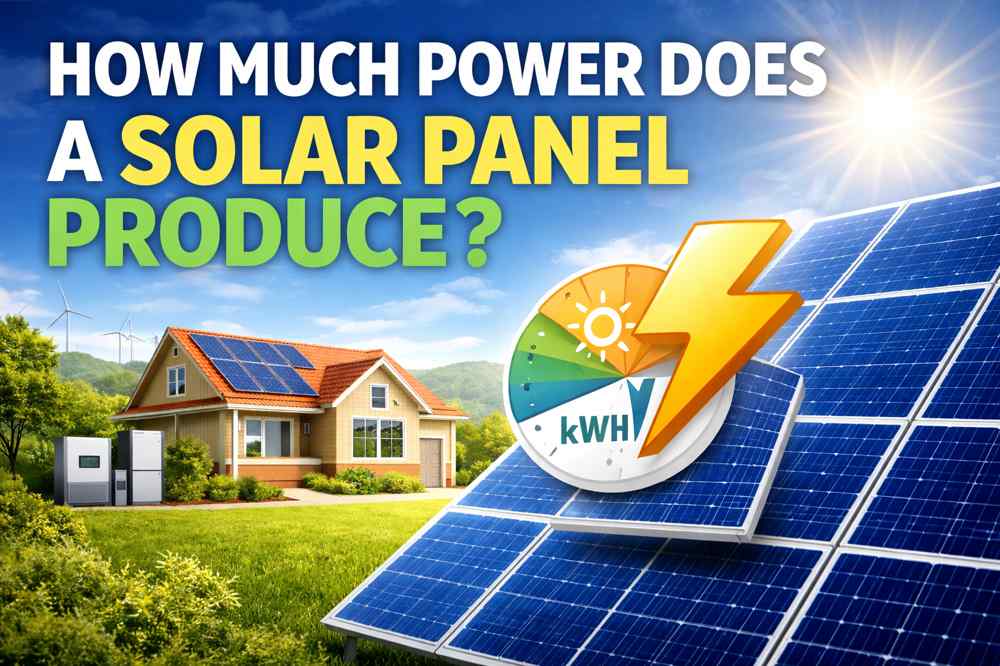
Solar panel output is measured in watts (W), which represents the maximum power a panel can produce under ideal conditions.
For example:
These ratings are based on Standard Test Conditions (STC), which include:
However, real-world conditions are rarely perfect, so actual solar energy generation is usually lower.
If you are new to solar energy, it helps to first understand the basics. Our complete guide solar panels explained covers how photovoltaic panels work, different types, and what to consider before installing a system.
Most residential photovoltaic panels today fall within this range:
| Panel Type | Typical Output |
|---|---|
| Standard residential panel | 400W |
| High-efficiency panel | 420–440W |
| Premium panel | 450W+ |
Higher wattage panels allow homeowners to generate more electricity with fewer panels.
To understand real output, we need to convert watts into kilowatt-hours (kWh).
Example:
A 400W solar panel in a sunny location:
This depends on sunlight exposure and system conditions.
When asking how much power does a solar panel produce, it is important to consider real-world variables.
Solar output depends heavily on location.
Average peak sun hours per day:
More sunlight means higher energy production.
Solar panel efficiency determines how much sunlight is converted into electricity.
Higher efficiency panels:
South-facing roofs produce the most electricity in the U.S.
East and west orientations can still perform well.
Solar panels become slightly less efficient at high temperatures. However, modern photovoltaic panels are designed to minimize these losses.
Even partial shading can reduce system output.
Common shading sources:
Annual output varies by location.
Example:
A 400W solar panel in the U.S.:
| Location | Annual Output |
|---|---|
| California | ~750–800 kWh |
| Texas | ~700–750 kWh |
| Florida | ~650–720 kWh |
| New York | ~550–650 kWh |
This shows how strongly solar energy generation depends on geography.
To estimate system size, homeowners must consider their electricity usage.
Example:
Average U.S. household consumption:
10,000–11,000 kWh per year
Using 400W panels:
If you want a detailed calculation, read our guide on how to calculate how many solar panels you need.
Consider a homeowner installing a 7 kW solar system.
System configuration:
| Component | Value |
|---|---|
| Panel wattage | 440W |
| Number of panels | 16 |
| Total system size | ~7 kW |
Estimated annual production:
9,000 – 11,000 kWh
This can cover most of a household’s electricity demand.
To increase solar energy generation:
A well-designed system can significantly improve performance.
Understanding solar panel output helps homeowners:
Choosing the right solar panels is essential for long-term performance.

For DIY solar projects, accurate system sizing is critical.
DIY systems typically include:
Preconfigured solar kits simplify the process by combining compatible components.
For homeowners and installers, AceFlex provides carefully selected solar panels and DIY solar kits designed for residential solar systems in the United States.
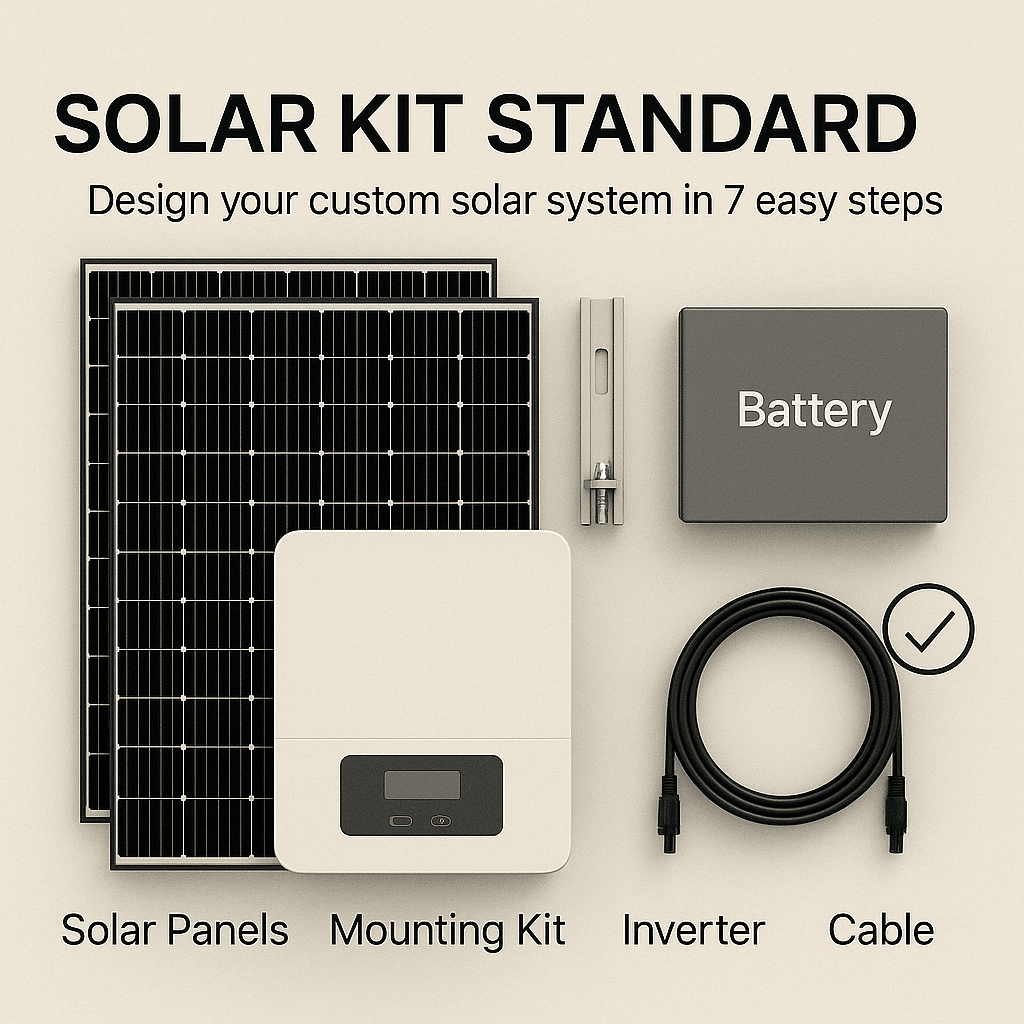
🔆 Standard Solar Kit – Your Custom Solar System in 7 Guided Steps
Design your solar setup with full flexibility and pre-configured mounting: choose solar panels, inverter, battery, mounting kit, wiring essentials, combiner, and accessories – all step by step and fully compatible.
✅ Includes mounting material from K2 Systems for standard layouts
✅ Choose only the components you need
✅ DIY-friendly and pre-checked for compatibility
✅ 🎁 Battery discount included when bundled
So, how much power does a solar panel produce? The answer depends on panel wattage, sunlight conditions, and system design. Most modern residential solar panels produce between 400W and 450W, generating roughly 600–800 kWh per year per panel.
By understanding these factors, homeowners can design efficient solar systems that meet their energy needs and maximize solar energy generation.
Choosing high-quality photovoltaic panels and properly sizing the system are key steps toward achieving reliable long-term performance.
A 400W panel typically produces 1.6–2.2 kWh per day and around 600–800 kWh per year, depending on location.
No. Output varies based on sunlight, weather conditions, and time of year.
Most homes need 15–25 solar panels, depending on electricity consumption and system size.
Yes. Solar panels still produce electricity in winter, although output may be lower due to shorter daylight hours.