One of the most important—and often misunderstood—questions in solar system design is: what size solar inverter do I need?
Many homeowners assume the inverter should match their electricity usage. In reality, inverter sizing depends primarily on your solar panel system, not your household consumption.
Choosing the wrong inverter size can reduce system efficiency, increase costs, or limit long-term performance.
In this guide, we explain how inverter sizing works, what factors matter, and how to choose the right inverter for residential solar systems.
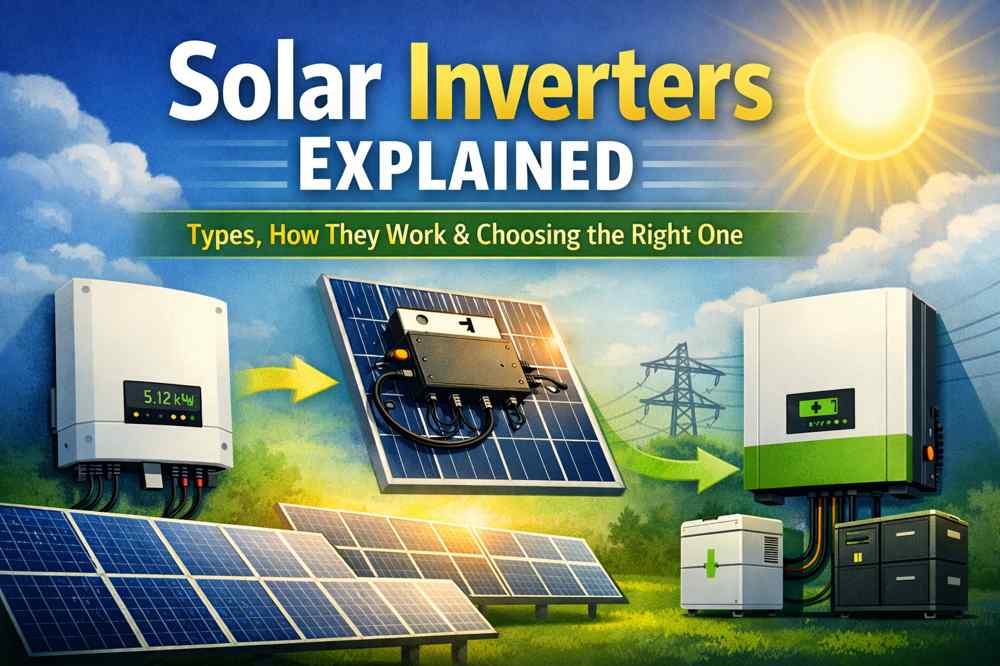
Before determining the correct inverter size, it is important to understand what the inverter actually does within your system. As explained in our guide on solar inverters: how they work & why they matter, the inverter converts DC electricity from your panels into usable AC power and directly impacts system performance.
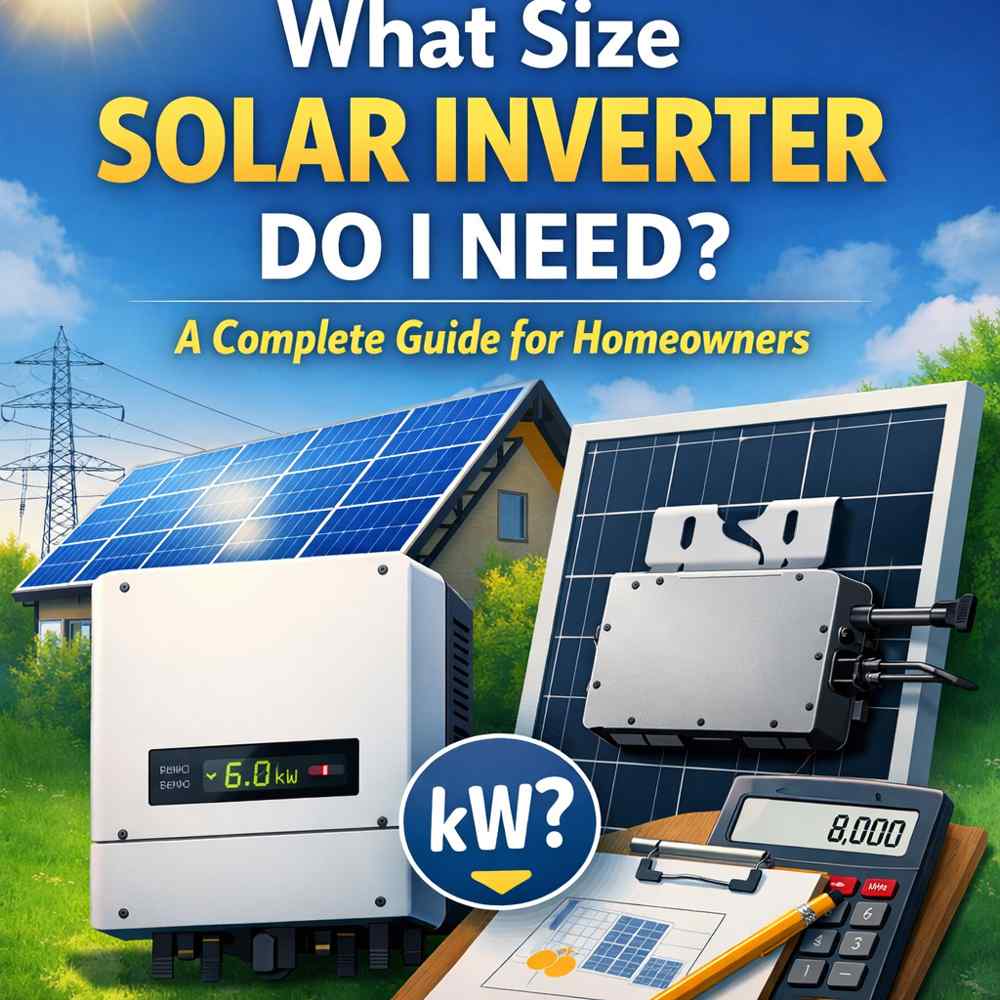
Solar inverter size is measured in watts (W) or kilowatts (kW).
It represents how much electricity the inverter can convert at any given time.
Example:
As a general rule, inverter size should be close to the total output of your solar panel system.
The most important concept:
Inverter size should match your solar panel system—not your home’s energy usage.
Why?
This is one of the most common misconceptions among homeowners.
Solar systems use something called the DC-to-AC ratio.
This compares:
Typical ratio:
Example:
This means your panels can produce slightly more power than the inverter can convert.
At first, this seems counterintuitive.
But there’s a reason.
Solar panels rarely operate at full capacity due to:
Because of this, slightly undersizing the inverter:
This approach is standard in modern system design.
If the inverter is too small, clipping can occur.
Clipping means:
However:
Oversizing the inverter can lead to:
In simple terms:
You pay for performance you never use.
The most important factor.
Example:
Geography affects solar production.
More sunlight may justify slightly larger inverter capacity.
Less sunlight may allow smaller sizing.
Shaded or non-optimal roofs:
If you plan to expand your system:
Sizing works differently depending on inverter type.
This allows more flexibility and scalability.
The way inverter sizing works also depends on the system type. String inverters are sized based on total system capacity, while microinverters are matched to each individual panel. If you are unsure which approach is better for your system, read our detailed comparison on string inverter vs microinverter: which solar inverter is better.
Typical residential system:
| Component | Value |
|---|---|
| Solar panels | 16 × 440W |
| Total system size | ~7 kW |
| Recommended inverter | ~6 kW |
This setup uses a 1.15–1.2 ratio, which is optimal.
When sizing a solar inverter, avoid:
These mistakes can reduce system performance and ROI.
To summarize:
Proper sizing ensures maximum efficiency and long-term performance.
A complete solar system includes:
The inverter plays a critical role in system performance and efficiency.
Choosing the right inverter size is essential for maximizing solar energy generation.
Preconfigured systems simplify this process by ensuring compatibility between components.
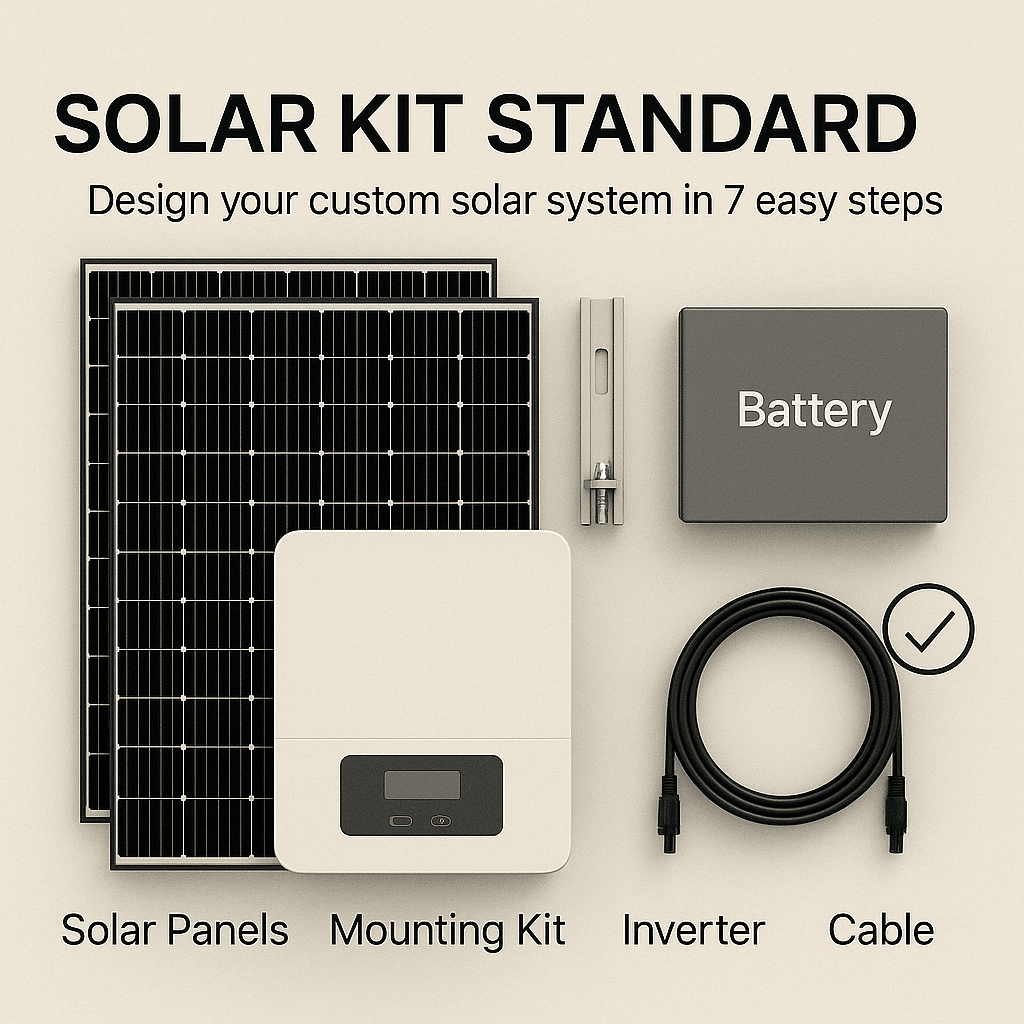
🔆 Standard Solar Kit – Your Custom Solar System in 7 Guided Steps
Design your solar setup with full flexibility and pre-configured mounting: choose solar panels, inverter, battery, mounting kit, wiring essentials, combiner, and accessories – all step by step and fully compatible.
✅ Includes mounting material from K2 Systems for standard layouts
✅ Choose only the components you need
✅ DIY-friendly and pre-checked for compatibility
✅ 🎁 Battery discount included when bundled
AceFlex provides carefully selected inverters, solar panels, batteries, and DIY solar kits designed for residential solar systems in the United States.

So, what size solar inverter do you need? The answer depends on your solar panel system, not your household electricity usage.
Most systems are designed with a slight DC-to-AC imbalance to optimize performance and reduce costs.
Choosing the correct inverter size ensures:
Understanding inverter sizing is a key step in building a reliable and high-performing solar system.
Typically, the inverter should match your solar system size in kW, with slight undersizing.
Usually no. Oversizing increases cost without improving performance.
Most systems use a ratio between 1.1 and 1.25.
Clipping occurs when the inverter cannot convert all available solar energy.
Yes, but it may require system adjustments.