Installing a solar energy system is only the first step toward energy independence. To truly maximize performance and savings, homeowners and installers rely on solar panel monitoring.
Monitoring systems allow you to track how much electricity your solar panels produce, how your system performs over time, and whether everything is working properly.
In this guide, we explain what solar panel monitoring is, how it works, and why it is essential for modern solar installations.

Solar panel monitoring refers to the tools and software used to track the performance of a solar energy system in real time.
Most monitoring systems connect directly to the solar inverter or monitoring gateway installed with the system.
These platforms provide detailed information about:
• solar energy production
• electricity consumption
• system performance
• potential technical issues
With this data, homeowners and installers can ensure that the solar system operates at peak efficiency.
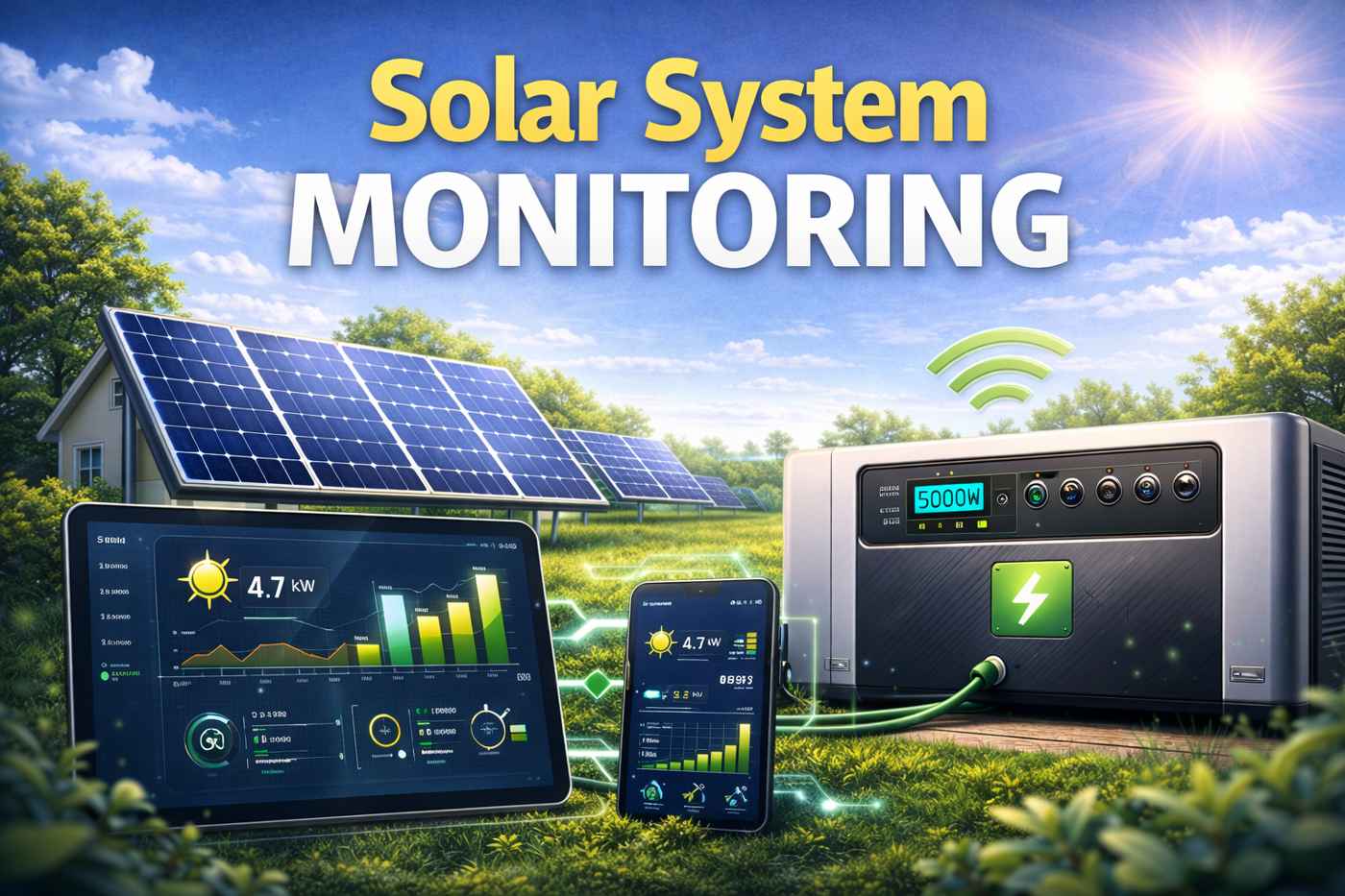
Solar monitoring systems collect data from the inverter and other system components. This information is then transmitted to a monitoring platform that displays system performance through a web portal or mobile app.
The monitoring process typically follows these steps.
Solar panels generate electricity from sunlight. The inverter converts the electricity into usable AC power. The monitoring system records energy production and sends the data to a cloud-based platform.
Users can then access the data through dashboards that show system performance in real time.
Most monitoring systems update data every few minutes.
Modern monitoring platforms provide a wide range of insights into system performance.
Monitoring systems track how much electricity your solar panels generate throughout the day.
This data helps homeowners understand how much energy their system produces and how much electricity they save.
Monitoring tools can detect drops in system performance.
For example, if one panel or inverter stops working properly, the monitoring platform can alert the user.
Early detection helps prevent long-term energy losses.
Some monitoring systems also track household electricity usage.
This allows homeowners to compare solar production with energy consumption and better manage their electricity usage.
Most monitoring systems store historical performance data.
Users can view daily, monthly, and yearly production statistics to evaluate long-term system performance.
There are several ways to monitor solar energy systems depending on system design and equipment.
Most residential solar systems use inverter-level monitoring.
In this setup, the inverter reports the total energy production of the entire solar array.
This is the most common and cost-effective monitoring approach.
Some systems provide monitoring for each individual solar panel.
Panel-level monitoring is often used with microinverters or power optimizers.
This allows users to identify performance issues at the panel level and maximize system efficiency.
Advanced monitoring systems include sensors that measure household energy usage.
This allows homeowners to see how solar production aligns with electricity consumption patterns.
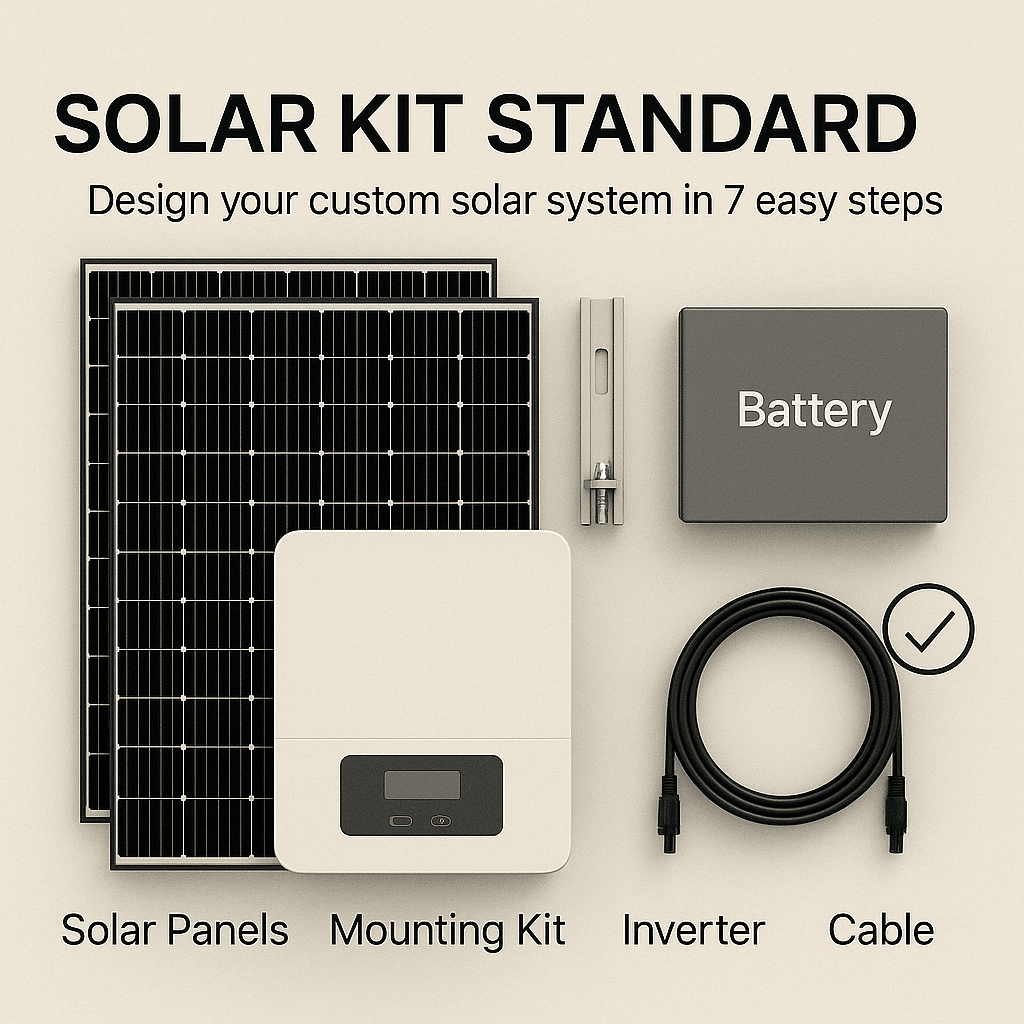
🔆 Standard Solar Kit – Your Custom Solar System in 7 Guided Steps
Design your solar setup with full flexibility and pre-configured mounting: choose solar panels, inverter, battery, mounting kit, wiring essentials, combiner, and accessories – all step by step and fully compatible.
✅ Includes mounting material from K2 Systems for standard layouts
✅ Choose only the components you need
✅ DIY-friendly and pre-checked for compatibility
✅ 🎁 Battery discount included when bundled
Solar monitoring provides several important advantages for solar system owners.
Monitoring allows homeowners to track how much electricity their system produces and ensure that the system operates efficiently.
If production drops unexpectedly, the issue can be investigated quickly.
Solar systems are designed to operate reliably for decades. However, components can occasionally malfunction.
Monitoring systems provide alerts if performance drops or equipment fails.
Early detection prevents long-term energy losses.
Solar monitoring helps homeowners better understand their electricity usage.
Many users adjust their energy consumption habits once they see real-time production and usage data.
This can increase overall energy efficiency.
Monitoring systems allow homeowners to verify that their solar installation performs as expected.
Production data can be compared with the original system design estimates.
Solar panel monitoring is not only valuable for homeowners. Installers also rely on monitoring platforms to manage customer systems.
Installers can remotely monitor multiple systems at once and identify potential issues quickly.
This allows service teams to respond faster and maintain system performance for customers.
Monitoring platforms often include fleet management tools designed specifically for solar installers.
Solar systems can technically operate without monitoring, but it becomes difficult to detect performance problems.
For example, if an inverter stops working or a panel becomes disconnected, the homeowner may not notice immediately.
This could result in weeks or months of lost energy production.
Solar monitoring helps ensure that problems are detected quickly and resolved before significant energy losses occur.
Most modern solar monitoring systems are integrated directly with the inverter.
Because the inverter manages the electricity produced by solar panels, it provides the most accurate system data.
Monitoring software typically connects to the inverter through a monitoring gateway or built-in internet connection.
If you want to learn more about the role inverters play in solar systems, you may also find our related guides helpful, including:
• Battery Powered Inverter: How They Work and When You Need One
• Solar Inverter Without Battery: How Grid-Tied Solar Systems Work
Understanding how inverters operate can help homeowners better interpret monitoring data and optimize system performance.
When selecting a solar monitoring solution, several factors should be considered.
First, compatibility with the inverter and solar equipment is essential.
Second, the monitoring platform should provide clear dashboards and easy access to system data.
Mobile apps are particularly useful because they allow homeowners to check system performance anytime.
Finally, reliability and long-term software support are important considerations.
Solar systems are designed to operate for decades, so monitoring software should be stable and well maintained.
Solar monitoring technology continues to improve as solar adoption increases.
New platforms integrate advanced analytics, artificial intelligence, and smart home energy management.
Some systems can automatically optimize electricity consumption based on solar production forecasts.
Others integrate with battery storage systems to manage energy flows more efficiently.
As solar systems become more sophisticated, monitoring will play an even larger role in maximizing performance and energy savings.
A complete solar energy system includes several components working together.
Solar panels generate electricity. Inverters convert that electricity into usable power. Mounting systems secure the panels in place.
Monitoring systems provide insight into how well the system performs.
Homeowners and installers can explore solar equipment including solar panels, inverters, mounting systems, and DIY solar kits designed for reliable solar installations.
At AceFlex, these components are carefully selected to help customers build efficient solar energy systems.
Solar panel monitoring is an essential tool for tracking and optimizing solar energy production.
Monitoring platforms allow homeowners and installers to view real-time system performance, detect technical issues, and maximize energy output.
With the growing adoption of solar energy in the United States, monitoring technology is becoming a standard feature of modern solar installations.
By understanding how monitoring systems work, solar owners can ensure their systems deliver reliable performance and long-term energy savings.
Solar panel monitoring tracks the energy production and performance of a solar installation through software dashboards and mobile apps.
Yes. Most modern solar monitoring platforms provide mobile apps that allow users to track system performance in real time.
Monitoring helps detect system problems early and ensures the solar system operates at peak efficiency.
Most modern solar systems include monitoring features integrated with the inverter.
Monitoring platforms typically display energy production, system performance, and sometimes household electricity consumption.