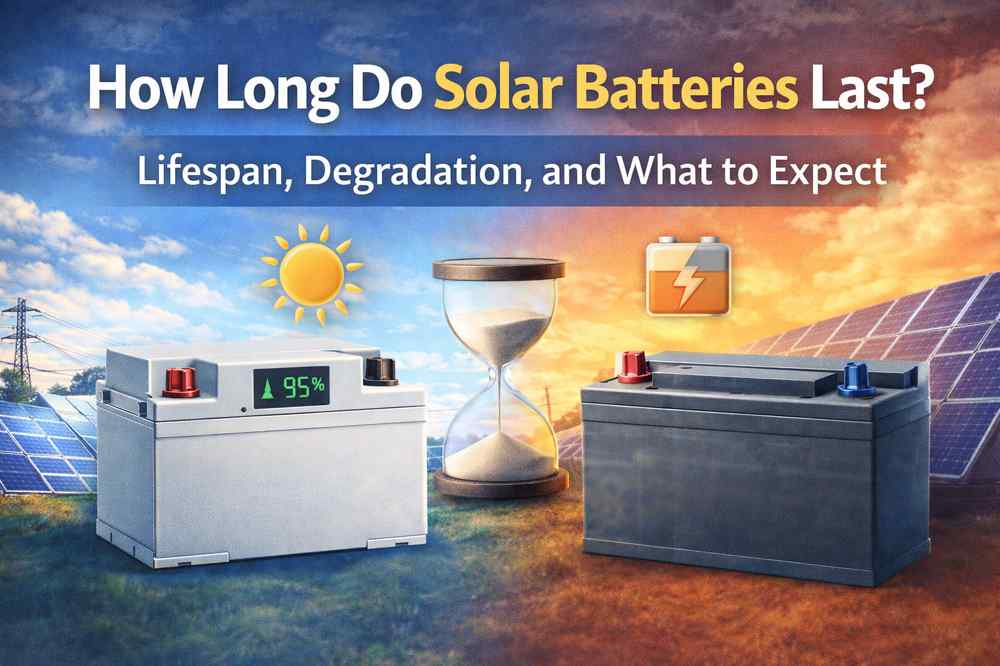
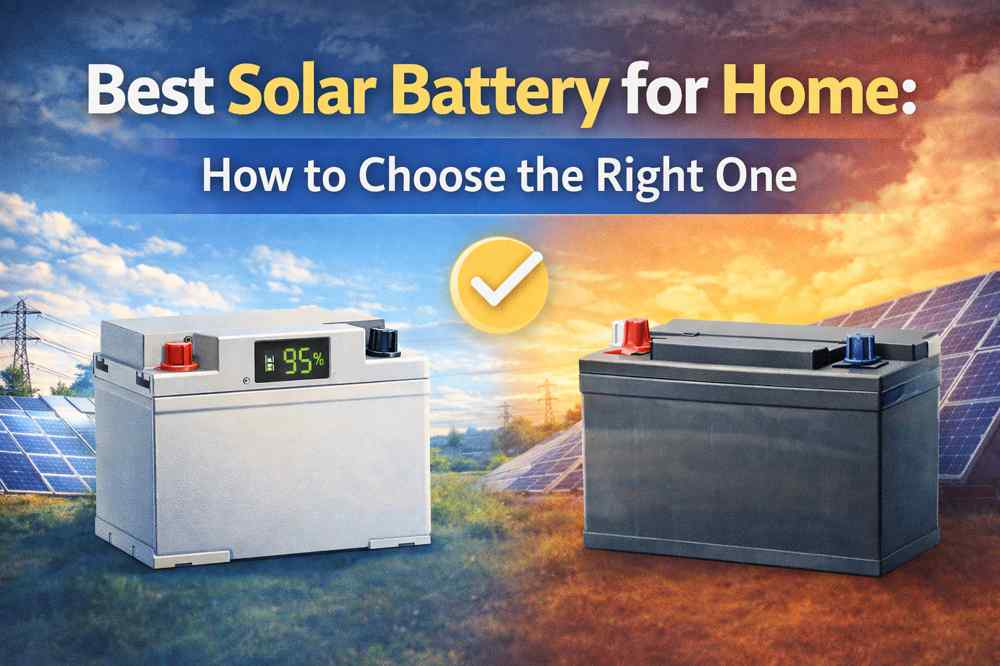
As more homeowners consider adding storage to their solar systems, one key question comes up: lithium vs lead-acid solar battery—which is better?
Both technologies are widely used in solar energy systems, but they differ significantly in efficiency, lifespan, cost, and performance.
Before comparing battery types, it is important to understand how solar storage works in general. As explained in solar batteries: how they work & why you need one, batteries store excess solar energy and make it available when your system is not producing power.
Solar batteries store excess electricity generated by your solar panels for later use.
The two most common types are:
Today, most residential systems use lithium-ion technology due to its performance advantages.
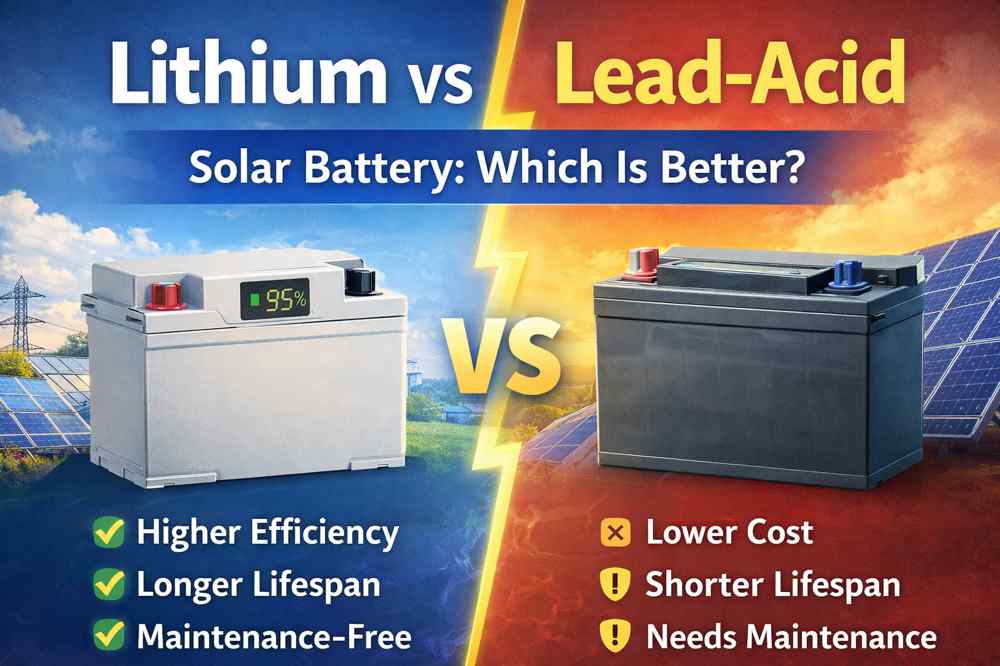
Lithium batteries are significantly more efficient.
Higher efficiency means less energy loss and better overall system performance.
Lithium batteries last much longer.
This makes lithium more cost-effective over time.
Lithium batteries can use more of their capacity safely.
This means lithium batteries deliver more usable energy.
Lead-acid batteries require maintenance.
Lithium batteries:
Lead-acid batteries are cheaper upfront.
Lithium batteries:
| Feature | Lithium Battery | Lead-Acid Battery |
|---|---|---|
| Efficiency | High | Moderate |
| Lifespan | Long | Short |
| Maintenance | None | Required |
| Usable Capacity | High | Limited |
| Cost | Higher upfront | Lower upfront |
In most residential systems, lithium batteries outperform lead-acid in nearly all categories.
Despite their limitations, lead-acid batteries can still be useful:
They remain a viable entry-level option.
Lithium batteries are ideal for:
Their efficiency and lifespan make them the preferred option for most homeowners.
Modern solar systems increasingly rely on lithium batteries because they:
They are now considered the standard for home solar storage.
When choosing a battery:
These decisions can significantly impact ROI.
Battery choice affects:
Choosing the right battery is not just about technology, but also about system compatibility and use case. For a broader overview of available options, see battery for solar systems.
Modern solar systems are becoming increasingly integrated.
Preconfigured systems simplify installation and ensure compatibility between components.
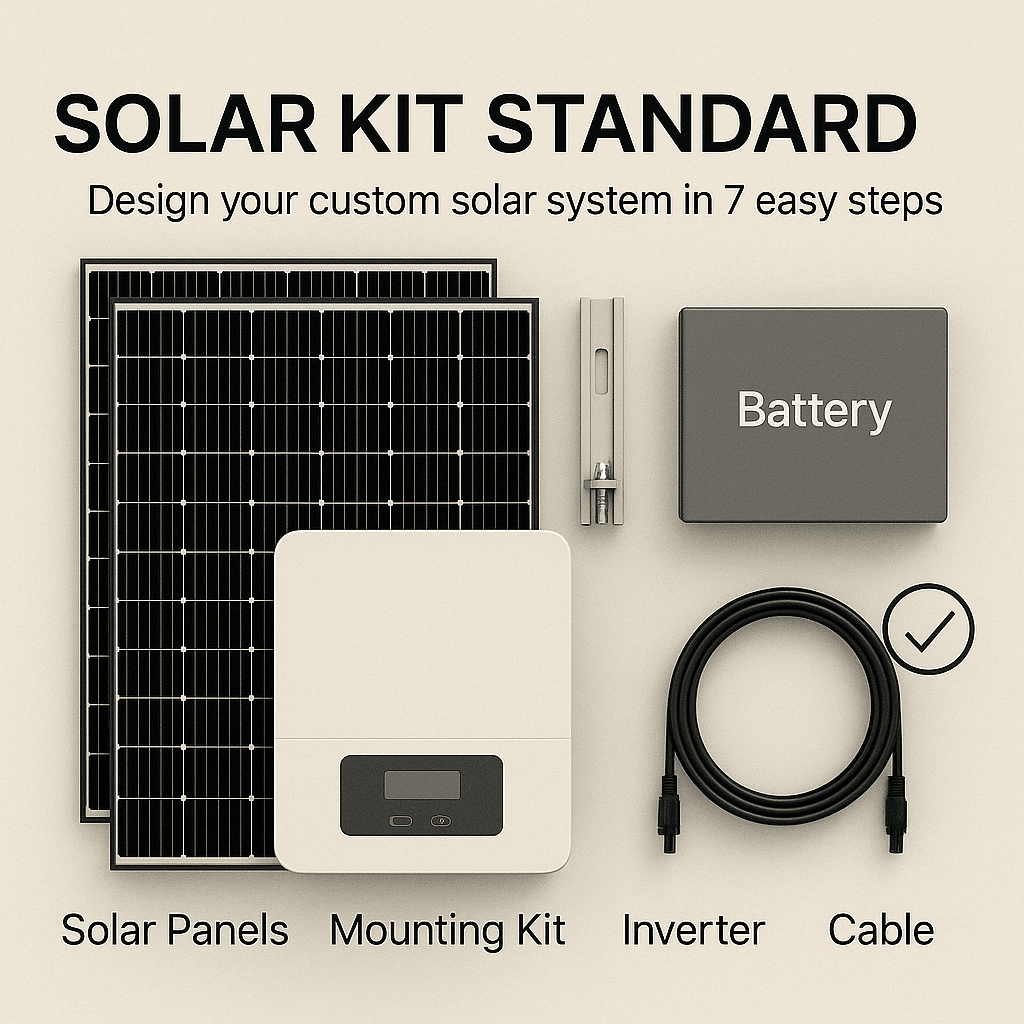
🔆 Standard Solar Kit – Your Custom Solar System in 7 Guided Steps
Design your solar setup with full flexibility and pre-configured mounting: choose solar panels, inverter, battery, mounting kit, wiring essentials, combiner, and accessories – all step by step and fully compatible.
✅ Includes mounting material from K2 Systems for standard layouts
✅ Choose only the components you need
✅ DIY-friendly and pre-checked for compatibility
✅ 🎁 Battery discount included when bundled
AceFlex provides carefully selected solar panels, inverters, batteries, and DIY solar kits designed for residential solar systems in the United States.
When comparing lithium vs lead-acid solar batteries, lithium clearly offers superior performance, efficiency, and long-term value.
While lead-acid batteries may still work for specific use cases, lithium has become the standard for modern residential solar systems.
Choosing the right battery ensures better performance, lower maintenance, and stronger long-term returns.
Lithium batteries are generally better due to higher efficiency and longer lifespan.
They are still used but are being replaced by lithium in most residential systems.
They offer better performance, longer life, and lower maintenance.
Yes, typically 10–15 years or more.
Yes, especially for low-cost or off-grid systems.