Information checked October 18, 2026. Adoption figures refer to 2025 installations, published in Berkeley Lab’s August 2026 data update.
Battery storage is becoming a more common part of a new U.S. residential solar installation. For buyers, the development raises useful questions: should storage be part of the initial equipment list, can it be added to an existing system, and what should a battery actually be expected to do?
A market trend is a starting point for those questions. Selecting the right product still depends on the purpose of the system, the equipment combination, and the installation requirements.
What the Latest Berkeley Lab Data Shows
Berkeley Lab’s U.S. Distributed Solar and Storage 2026 Data Update reports that the share of new U.S. residential PV installations paired with storage rose from 25% in 2024 to 37% in 2025.
Much of the increase came from California, although attachment rates also grew elsewhere, including notable increases in Arizona and Texas. These figures describe batteries paired with new PV installations. They exclude storage added to existing solar systems and standalone battery installations.
The timing is important: this is a 2026 publication describing 2025 activity. It is not a measurement of the percentage of homeowners purchasing batteries in October 2026.
What the Trend Does Not Tell You
Adoption data does not determine an individual household’s battery size, preferred brand, or financial outcome. Nor does it establish that every new solar system should include storage.
Our recommendation is to treat the trend as a reason to ask better questions early in the purchasing process. The product decision should follow the requirements of your project.
First, Define What You Want the Battery to Do
Store Solar Energy for Later Use
The Department of Energy’s homeowner guide describes storage as a way to retain energy for use later. If that is your objective, ask your installer to evaluate the proposed battery against your expected generation and consumption patterns.
Support Selected Loads During an Outage
Make a list of the appliances or circuits you would want to use. A request to support a refrigerator, lighting, and communications equipment is different from an expectation of running every appliance in the home.
Give that list to your installer before selecting equipment. Ask for the assumptions behind the proposed arrangement instead of relying on the general label “home backup.”
Evaluate a Specific Rate or Operating Arrangement
If a proposal promises savings from the way the battery is operated, request the actual tariff, the proposed settings, and the assumptions used. Keep the estimated savings separate from the equipment price. The availability of a useful operating arrangement should be verified for your own service address.
Battery Capacity and Power Are Different Specifications
Energy capacity is commonly expressed in kilowatt-hours (kWh), while output power is expressed in kilowatts (kW). You need both to understand the intended role of a battery.
Key battery specifications to review| Specification | What it describes | Question for your installer |
|---|
| Usable capacity, kWh | Energy available for use under specified conditions. | How much energy does the proposed operating plan require? |
|---|
| Continuous output, kW | Power that can be supplied continuously under the rated conditions. | Which intended loads can operate together? |
|---|
| Short-duration output | A separate output limit with a stated duration. | Does it meet the relevant load requirements? |
|---|
| Compatibility | Supported inverter, controls, and equipment combinations. | Are all exact models documented as suitable together? |
|---|
For a concrete product example, Enphase lists its U.S. IQ Battery 5P, model IQBATTERY-5P-1P-NA, with 5.0 kWh of usable energy and 3.84 kW of continuous output. Those two figures describe different capabilities. They are not interchangeable, and this example is not a recommendation for a particular home.
An Illustrative Runtime Calculation
As simple arithmetic, 5 kWh divided by a constant 1 kW load equals five hours. That is an idealized calculation, not a promised runtime for the product above.
An actual estimate must account for reserve settings, conversion losses, changing loads, operating conditions, and any solar charging. Ask the installer to state these assumptions alongside the result. A capacity figure alone should not be turned into a guarantee of overnight or multi-day backup.
Does Buying a Battery Guarantee Backup Power?
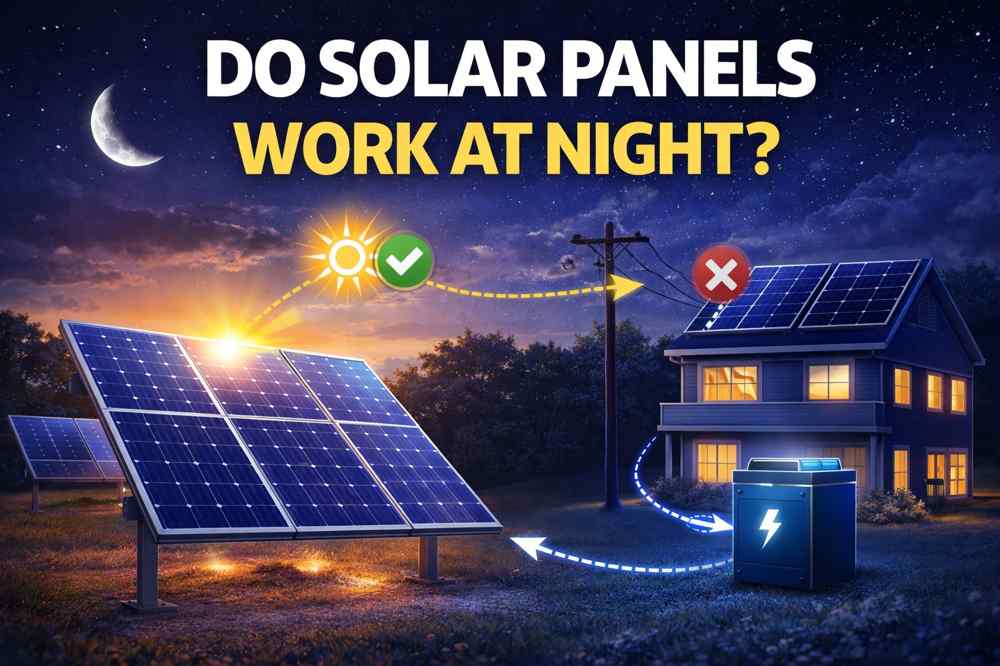
No. The Department of Energy’s Solar and Resilience Basics explains that grid-connected solar systems generally shut down when grid power is lost. Providing power during an outage requires an appropriately configured system.
Have your installer confirm the battery, inverter, control and isolation equipment, backed-up circuits, and any additional accessories required. Check what is included in the product package and what needs to be ordered separately.
For an existing solar installation, provide the exact current inverter and other equipment models. Avoid assuming that a new battery can simply be connected because the brands are familiar or because another home uses a similar product.
How to Build a Complete Battery Equipment Order
- Document the purpose. Write down whether the priority is later energy use, selected-load backup, or another agreed objective.
- Confirm the design with your installer. Get the approved model combination and equipment list before ordering.
- Check package contents. Identify controls, communications components, cables, and mounting parts supplied separately.
- Read the exact model’s documents. Review installation conditions, operating requirements, and warranty terms.
- Confirm quantity and delivery. Provide the model, required quantity, delivery ZIP code, and project timing when requesting availability information.
Keep the documents and written equipment list together. If a model substitution is proposed later, have the complete combination reviewed again before accepting the change.
Product Information and Support From AceFlex
Explore solar batteries and inverters, or use the Solar Glossary to understand specification terms.
For product documents, package details, availability, or order questions, contact AceFlex. We are an online equipment retailer; your installer should confirm the final system design and installation requirements.
FAQ — Buying Solar Battery Storage
Does the 37% figure describe all home batteries?
No. It refers to new residential PV installations paired with storage in the cited 2025 data. Retrofits and standalone battery installations are excluded.
Is a larger kWh number always the best choice?
Capacity is only one specification. Compare power output, compatibility, operating requirements, and the job the battery is intended to do.
Will one battery power my entire home?
That cannot be determined from the label “home battery.” Have your installer assess the intended loads, equipment limits, and complete configuration.
Can I add storage to my existing solar system?
Ask your installer to review your exact current equipment and the proposed storage system. Obtain the confirmed combination before ordering components.
What information should I send when asking about a product?
Include the exact battery model, quantity, delivery ZIP code, and relevant existing equipment model numbers. Add your required date if timing matters.
Sources and Information Date
Checked October 18, 2026: Berkeley Lab — U.S. Distributed Solar and Storage 2026 Data Update, slide 5; DOE Solar and Resilience Basics; DOE Homeowner’s Guide to Solar; and Enphase U.S. IQ Battery 5P specifications. The runtime calculation is illustrative arithmetic, not a measured product-performance result.