When designing a solar energy system, most homeowners focus on panels. However, one of the most critical components is often overlooked: solar inverters explained.
If solar panels generate electricity, the inverter makes that electricity usable. Without it, your system cannot power your home.
This guide explains solar inverters in simple terms. If you want a deeper breakdown of inverter functionality and importance, see our article on solar inverters: how they work & why they matter.
A solar inverter converts direct current (DC) electricity from photovoltaic panels into alternating current (AC) electricity used in homes.
In simple terms:
Without an inverter, solar panels alone cannot power household appliances.
The process is straightforward:
Modern inverters also monitor performance and optimize energy output.
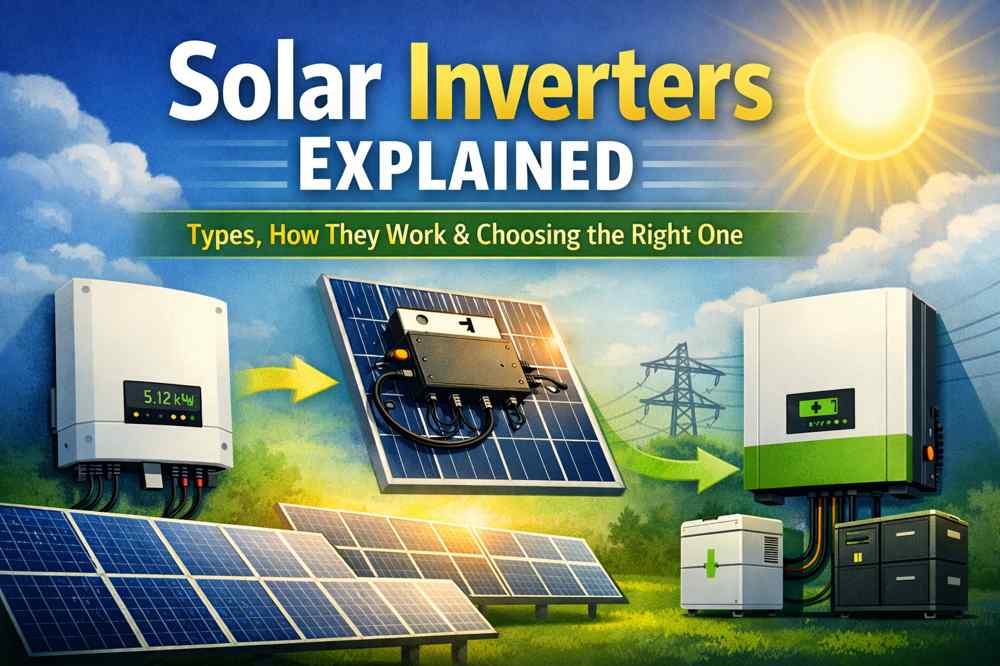
Understanding inverter types is essential for system design.
Most common and cost-effective option.
Characteristics:
Best for:
Installed on each panel individually.
Characteristics:
Best for:
For a detailed breakdown, read our full guide on micro inverters.
Combine inverter and battery functionality.
Characteristics:
Best for:
Learn more in hybrid inverters: the future of solar power storage.
Work with string inverters to improve performance.
Characteristics:
The inverter directly affects:
Choosing the wrong inverter can significantly reduce output.
Key factors:
Modern inverters typically achieve:
Higher efficiency means less energy loss during conversion.
Inverters require maintenance to ensure long-term performance.
Typical best practices:
For a detailed checklist, read how to maintain your solar electricity inverter for optimal performance.
A complete solar system includes:
Understanding how these components interact is essential for system performance.
DIY solar installations require careful component selection.
Inverters must be:
Preconfigured solar kits simplify this process.
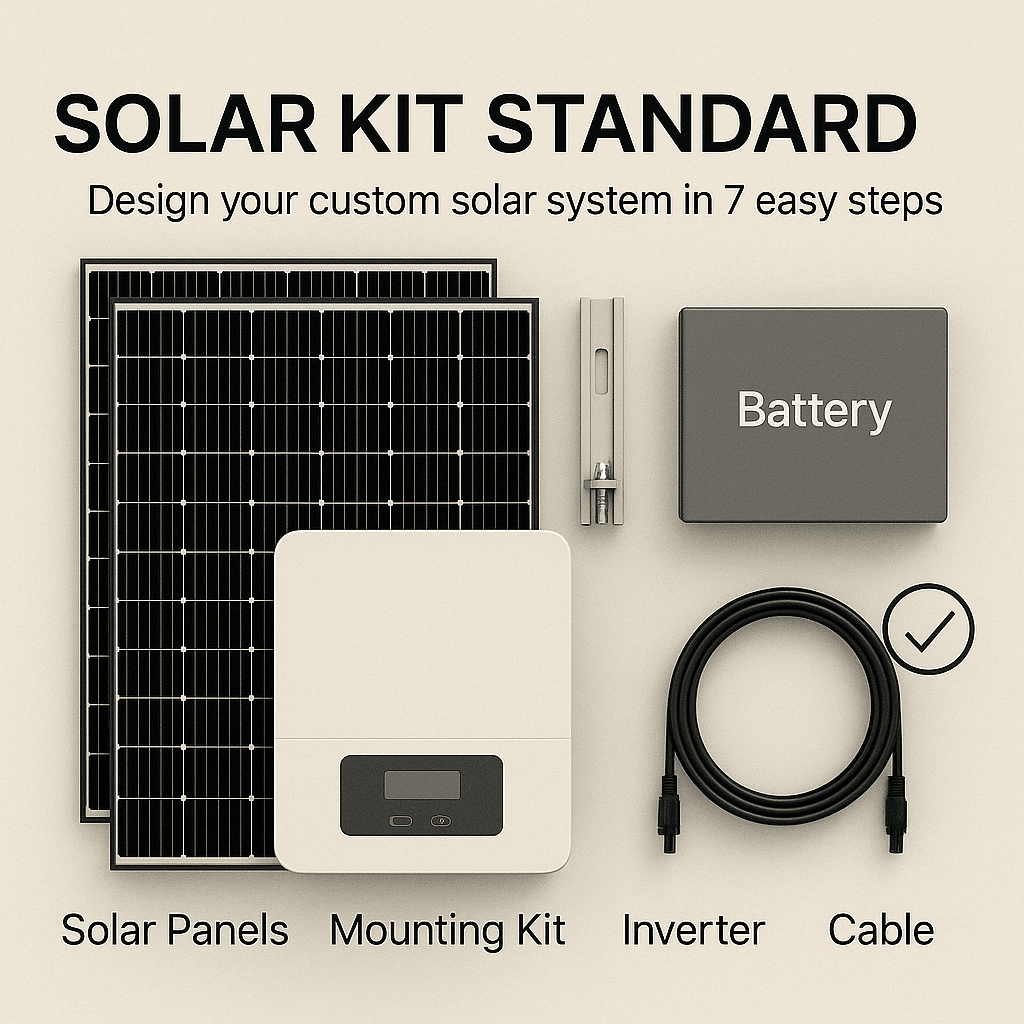
🔆 Standard Solar Kit – Your Custom Solar System in 7 Guided Steps
Design your solar setup with full flexibility and pre-configured mounting: choose solar panels, inverter, battery, mounting kit, wiring essentials, combiner, and accessories – all step by step and fully compatible.
✅ Includes mounting material from K2 Systems for standard layouts
✅ Choose only the components you need
✅ DIY-friendly and pre-checked for compatibility
✅ 🎁 Battery discount included when bundled
AceFlex provides carefully selected inverters, solar panels, batteries, and DIY solar kits for residential solar systems across the United States.
Understanding how solar inverters work is essential for building an efficient solar system. While solar panels generate electricity, the inverter determines how effectively that energy can be used.
Choosing the right inverter type—string, microinverter, or hybrid—depends on your roof, budget, and long-term energy goals.
A well-designed system with the right inverter ensures maximum performance, reliability, and long-term value.
It converts DC electricity from solar panels into usable AC electricity.
It depends on your system. Microinverters are best for shading, while string inverters are more cost-effective.
Only if you plan to use battery storage.
Typically 10–15 years, shorter than solar panels.
Yes. Regular monitoring and maintenance help ensure optimal performance and longevity.