As more homeowners invest in solar energy, battery storage is becoming a key component of modern systems. Choosing the best solar battery for home use is essential for maximizing energy independence, reducing reliance on the grid, and improving overall system performance.
While solar panels generate electricity during the day, a battery allows you to store excess energy and use it when you need it most. However, not all batteries are equal, and selecting the right one depends on your energy needs, system design, and long-term goals.
Before choosing a battery, it is important to understand how storage systems function. See solar batteries: how they work & why you need one.

The best solar battery is not just about capacity. It must balance performance, reliability, and long-term value.
Key factors include:
Battery capacity is measured in kilowatt-hours (kWh).
Typical residential systems:
This determines how much energy you can store and use.
Most modern batteries offer:
Higher efficiency means less energy loss.
Solar batteries typically last:
Longer lifespan reduces replacement costs.
This indicates how much of the battery can be used.
Lithium batteries generally offer higher DoD than lead-acid.
Choosing the right battery type is critical.
Most popular option.
Advantages:
Older technology.
Advantages:
Disadvantages:
For most residential systems:
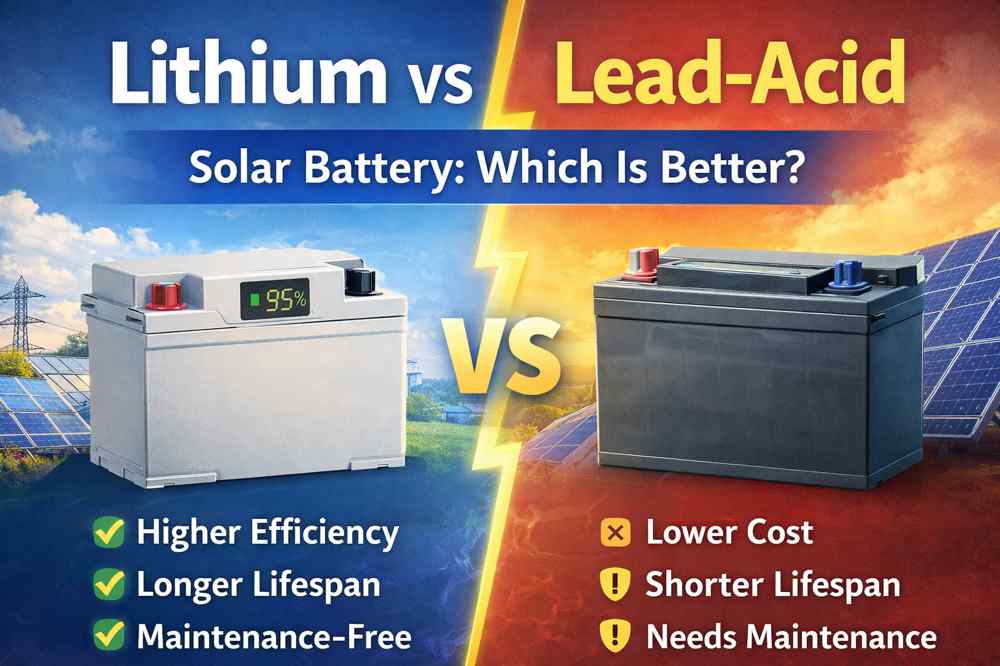
The choice between lithium and lead-acid significantly impacts performance. Learn more in lithium vs lead-acid solar battery comparison.
One of the main reasons homeowners install batteries is to gain control over their energy usage.
Batteries allow you to:
One of the main benefits of storage is reduced reliance on the grid. Read more about why solar batteries are important for energy independence.
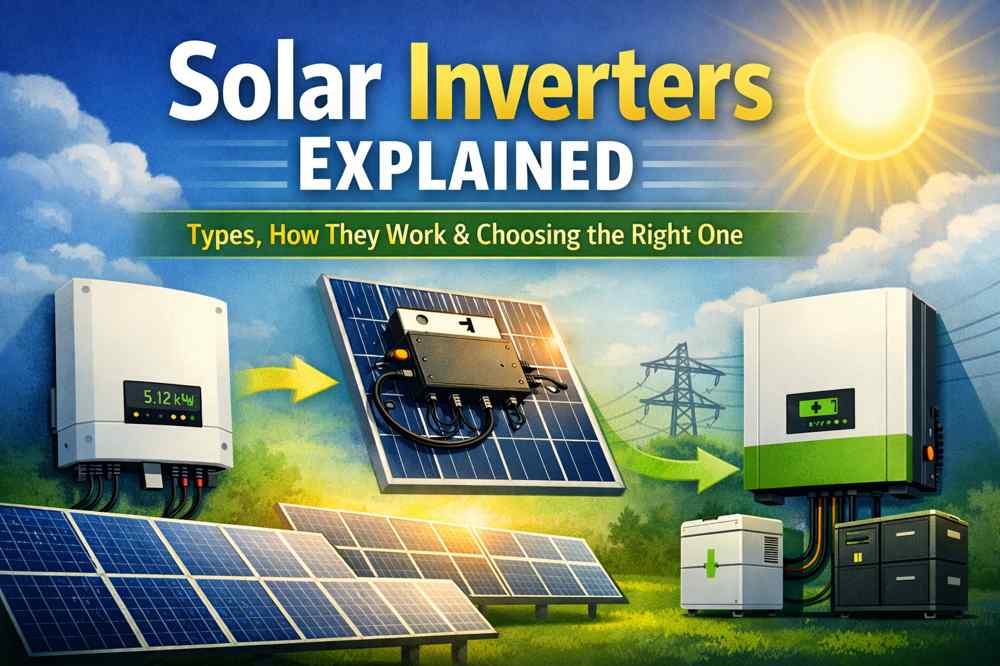
Batteries require compatible inverters to function properly.
Choosing the right inverter is critical for battery performance.
Battery size depends on:
Typical guideline:
Solar batteries represent a significant investment.
Typical considerations:
Prices continue to decrease as adoption grows.
Incentives and policies vary by state. You can check current programs on DSIRE (Database of State Incentives for Renewables & Efficiency).
When choosing a solar battery, avoid:
These mistakes can reduce performance and ROI.
Typical setup:
Result:
A complete solar system includes:
The battery adds flexibility, resilience, and energy independence.
Battery storage plays an increasing role in grid stability and renewable integration, as outlined by the U.S. Department of Energy.
Modern solar systems are increasingly integrated and customizable.
Preconfigured systems simplify the process and ensure compatibility between components.
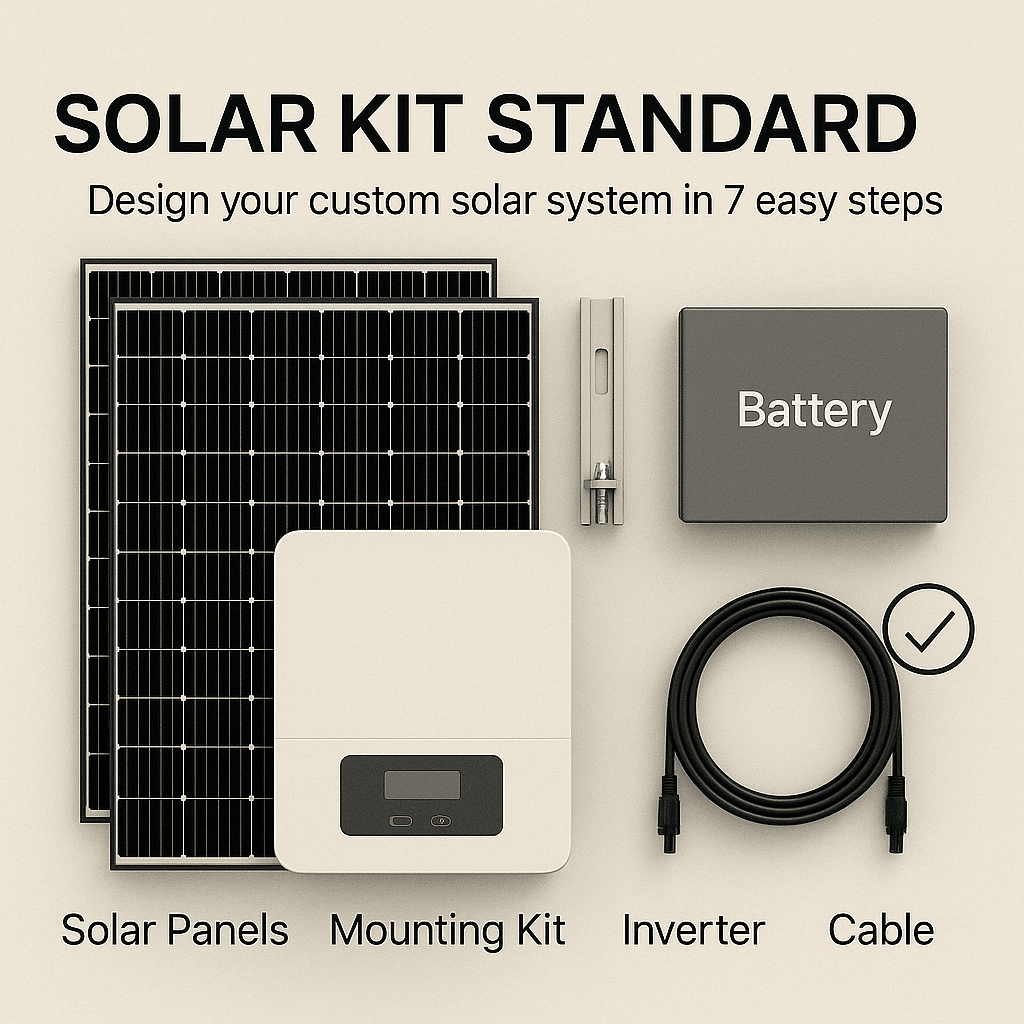
🔆 Standard Solar Kit – Your Custom Solar System in 7 Guided Steps
Design your solar setup with full flexibility and pre-configured mounting: choose solar panels, inverter, battery, mounting kit, wiring essentials, combiner, and accessories – all step by step and fully compatible.
✅ Includes mounting material from K2 Systems for standard layouts
✅ Choose only the components you need
✅ DIY-friendly and pre-checked for compatibility
✅ 🎁 Battery discount included when bundled
AceFlex provides carefully selected solar panels, inverters, batteries, and DIY solar kits designed for residential solar systems in the United States.

Choosing the best solar battery for home use depends on your energy needs, budget, and long-term goals.
Lithium batteries offer the best performance and reliability for most homeowners, while lead-acid may still be suitable for limited use cases.
A well-chosen battery enhances system performance, increases energy independence, and improves long-term return on investment.
Lithium-ion batteries are generally the best option due to efficiency and lifespan.
Most homes use between 10–20 kWh, depending on energy usage.
Yes, especially for backup power and energy independence.
Typically 10–15 years.
Yes, many systems allow retrofitting with AC-coupled solutions.