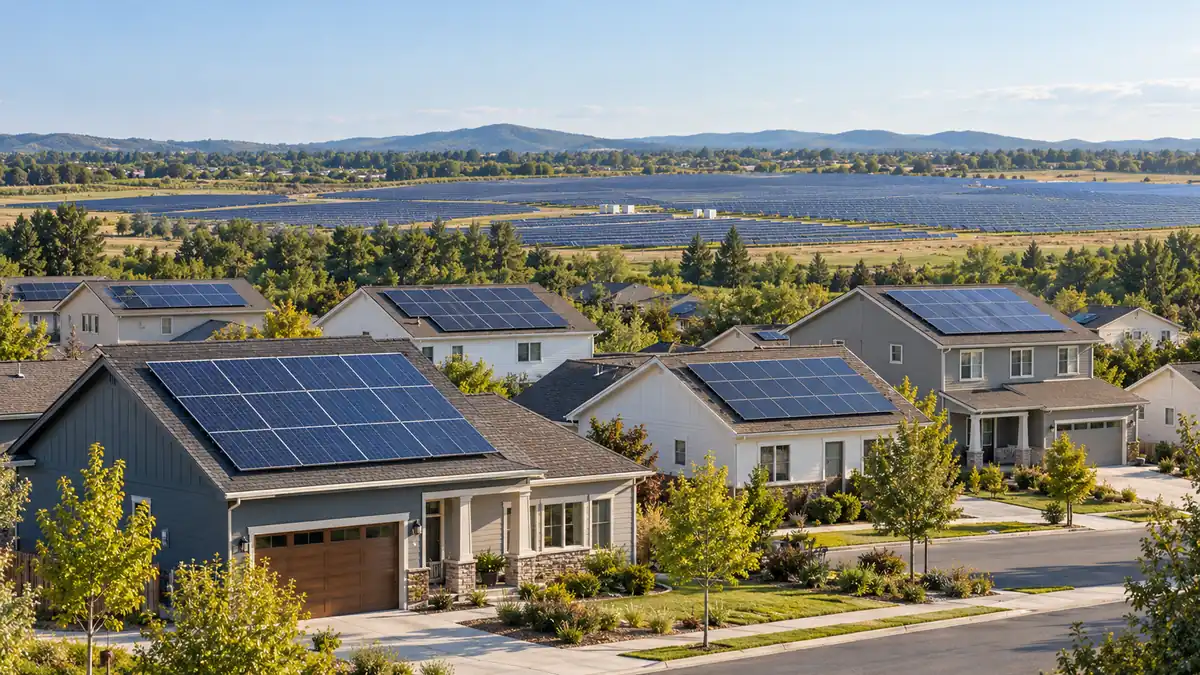

California leads the United States in solar energy adoption. And that’s no coincidence. Because the Golden State offers ideal conditions: plenty of sunshine, progressive energy policies, and rising electricity prices. That’s why solar energy in California is booming — for both homeowners and businesses.

Because the state gets an average of 284 sunny days per year. That’s much higher than most parts of the U.S. And since solar panels rely on sunlight, the output is excellent year-round. So even in winter, solar systems keep generating clean power.

The state offers various programs and rebates. And on top of that, federal tax credits still apply. For example, you can deduct up to 30% of the installation cost through the Investment Tax Credit (ITC). Local utilities may also provide net metering, allowing you to sell excess energy back to the grid.
This post references the former 30% Federal Solar Tax Credit. For current rules and guidance on solar after the federal tax credit , please read our updated overview.

Key Features:
✅ Predefined layout: 20 panels (1×20 or 2×10 portrait)
✅ Fully compatible with asphalt shingle roofs (Big Foot + Chem Link Flashing)
✅ 25-year K2 product warranty and UL-certified components
Absolutely. While upfront costs can seem high, the long-term savings are massive. Most homeowners break even after 5 to 8 years. And because electricity prices in California are among the highest in the country, the ROI is even faster.
It depends on your system size, energy usage, and available incentives. But many households save $1,500 to $2,500 per year. Over 25 years, that can add up to over $50,000. And if you pair your system with battery storage, you increase your energy independence even more.

Yes, and you should. Battery storage lets you use solar power even at night or during outages. And because California experiences rolling blackouts in some areas, backup energy adds a layer of security.
Definitely. Commercial properties often have large, unused roof areas. That makes them ideal for solar arrays. And because businesses use power mostly during the day, they benefit directly from solar production without needing as much storage.

✅ 11.4 kW hybrid inverter
✅ Scalable up to 80 kWh
✅ App/web-based remote monitoring
There is a change. California’s NEM 3.0 policy has altered how excess energy is credited. Instead of receiving the full retail rate, customers now get lower export rates. That makes self-consumption and battery storage more important than ever.
Yes, and you should act soon. Because while incentives are still available now, policies may shift again. Installing solar sooner helps you lock in current rates and maximize your long-term benefits.

Here’s a rough breakdown for a standard home system:
| 🔧 Component | 💡 Details |
|---|---|
| System Size | 6 kW |
| Estimated Cost | $15,000 – $18,000 |
| Federal Tax Credit (30%) | –$4,500 to –$5,400 |
| Net Metering Value | $400 – $900/year (NEM 3.0 adjusted) |
| Annual Savings | $1,500 – $2,500 |
| Payback Period | 5–8 years |
Get a professional site evaluation. Because roof angle, shading, and orientation affect performance. Also, always check for updated state and federal programs. That way, you get the best possible return.
We at AceFlex.us partner with trusted U.S. solar professionals. And we help you from start to finish — from system design to financing options. Our experts guide you step-by-step, so you can switch to solar energy in California with confidence and peace of mind.
Contact AceFlex GmbH today and get your personalized solar quote for California. Let’s build a clean, cost-efficient future — together!

California gets about 27% of its electricity from solar energy. And because this number keeps rising, solar is now a key part of the state’s energy mix.
Yes, because it has long sunny days and high electricity rates. And since incentives are still available, the financial return remains strong.
Roughly 15–20% of single-family homes in California have solar panels. And this number continues to grow as solar becomes more affordable.
The NEM 3.0 policy reduced the value of exported solar power. But demand for battery storage is now increasing, so the industry is adapting.
Sometimes yes, because sunny days and high production can lead to oversupply. That’s why battery storage and smart grid management are more important than ever.
One major issue is its intermittency, because the sun doesn’t shine 24/7. And without storage, power supply can become unstable.
Solar is mostly clean, but panel production uses raw materials and energy. And some panels contain toxic elements, which require careful recycling.
It depends, because for some locations wind or hydro may be more efficient. But combining solar with storage and smart management often works best.
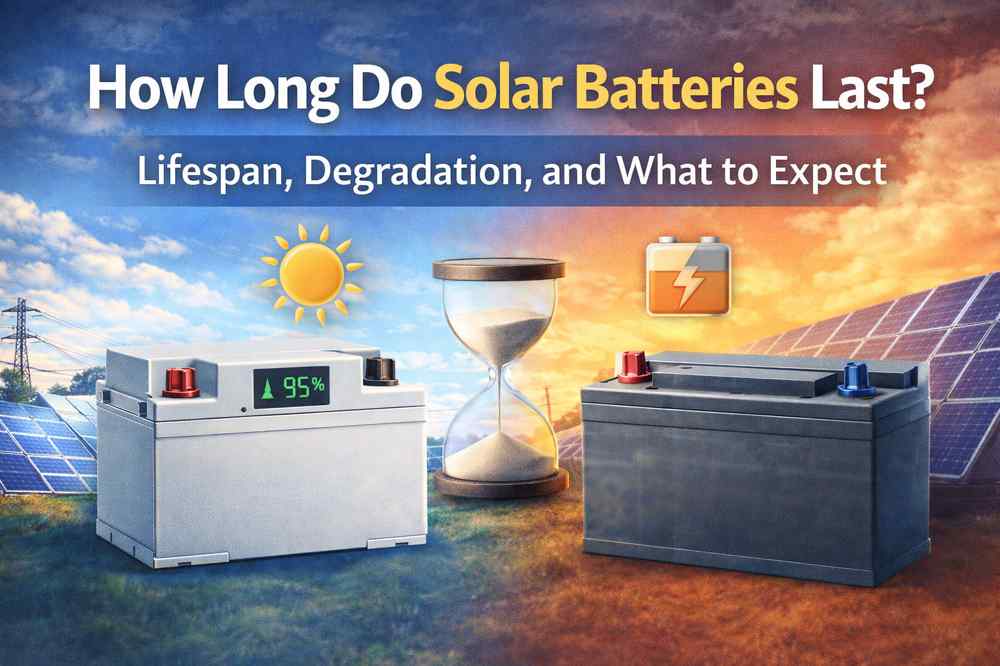
Most panels last 25 to 30 years, though performance slowly declines. And with regular maintenance, many still work well beyond that.
Panels still produce energy, but at a lower efficiency. And you can either replace them or keep using them with reduced output.
Usually once or twice a year, especially if there’s dust or bird droppings. And regular cleaning helps maintain high efficiency.
A 3kW system typically costs between $6,000 and $9,000 before incentives. But tax credits can reduce that amount significantly.
For small homes with low usage, 3 kW can be enough. But larger households may need 5 kW or more for full coverage.
Yes, as long as the system size and inverter capacity match your AC’s needs. And it works best during sunny hours or with battery backup.
It’s a system that combines solar panels with battery storage and grid power. And it gives you more flexibility and backup during outages.