
The effects of climate change are becoming more visible by the day—rising temperatures, unpredictable weather, and extreme energy costs are just a few of the challenges we now face. One of the main contributors? Carbon emissions, driven largely by the way we produce and consume electricity.
If you’re looking for a way to reduce carbon emissions, switching to solar energy is one of the most effective steps you can take. Photovoltaic (PV) systems allow homeowners and businesses to generate clean, renewable power—reducing their carbon footprint while gaining energy independence. And with today’s solar technology more efficient and affordable than ever, there’s never been a better time to start.
Traditional electricity generation relies heavily on burning fossil fuels like coal, oil, and natural gas. This process releases massive amounts of carbon dioxide (CO₂) into the atmosphere, trapping heat and accelerating global warming. In fact, the energy sector alone is responsible for roughly 25% of global greenhouse gas emissions.
Solar power, by contrast, generates electricity without emitting any CO₂ during operation. Once installed, your solar panels harness energy from the sun—turning it into usable electricity for your home or business. That means zero fuel combustion, zero emissions, and a big win for the environment.
But it doesn’t stop there. The more households and companies adopt solar energy, the more pressure we take off centralized power grids that still rely on fossil fuels. The result? A cleaner, more resilient energy system for everyone.

Installing a photovoltaic system isn’t just about cutting your electric bill—it’s about cutting carbon. But how much of an impact does one solar installation really make?
Let’s break it down.
A typical 8 kW solar system, like the one available in our AceFlex Solar Kits, can generate around 11,000–13,000 kWh of clean electricity per year, depending on your location and sun exposure. In comparison, generating the same amount of power from the U.S. grid—largely powered by fossil fuels—would release approximately 6–7 metric tons of CO₂ annually.
That’s the equivalent of:
Over a system’s 25+ year lifespan, this adds up to more than 150 metric tons of CO₂ avoided—all from one home going solar. Multiply that by thousands of households, and the effect becomes transformational.
By investing in a PV system today, you’re not just reducing your carbon footprint—you’re actively building a sustainable future.
Not all solar setups are created equal—if you want to maximize your carbon reduction, choosing the right components is key. High-efficiency panels, reliable inverters, and scalable storage solutions can dramatically increase the amount of clean energy your system produces over its lifetime.
At AceFlex, we make it easy to find the perfect solution for your project. Our Solar Kits are designed to fit different needs:
To further boost your sustainability efforts, consider integrating hybrid inverters and battery storage. Hybrid systems allow you to store excess solar energy for later use, minimizing your reliance on fossil-fueled grid power even at night or during outages.
Every high-quality component you choose doesn’t just enhance performance—it also amplifies your contribution to reducing carbon emissions.
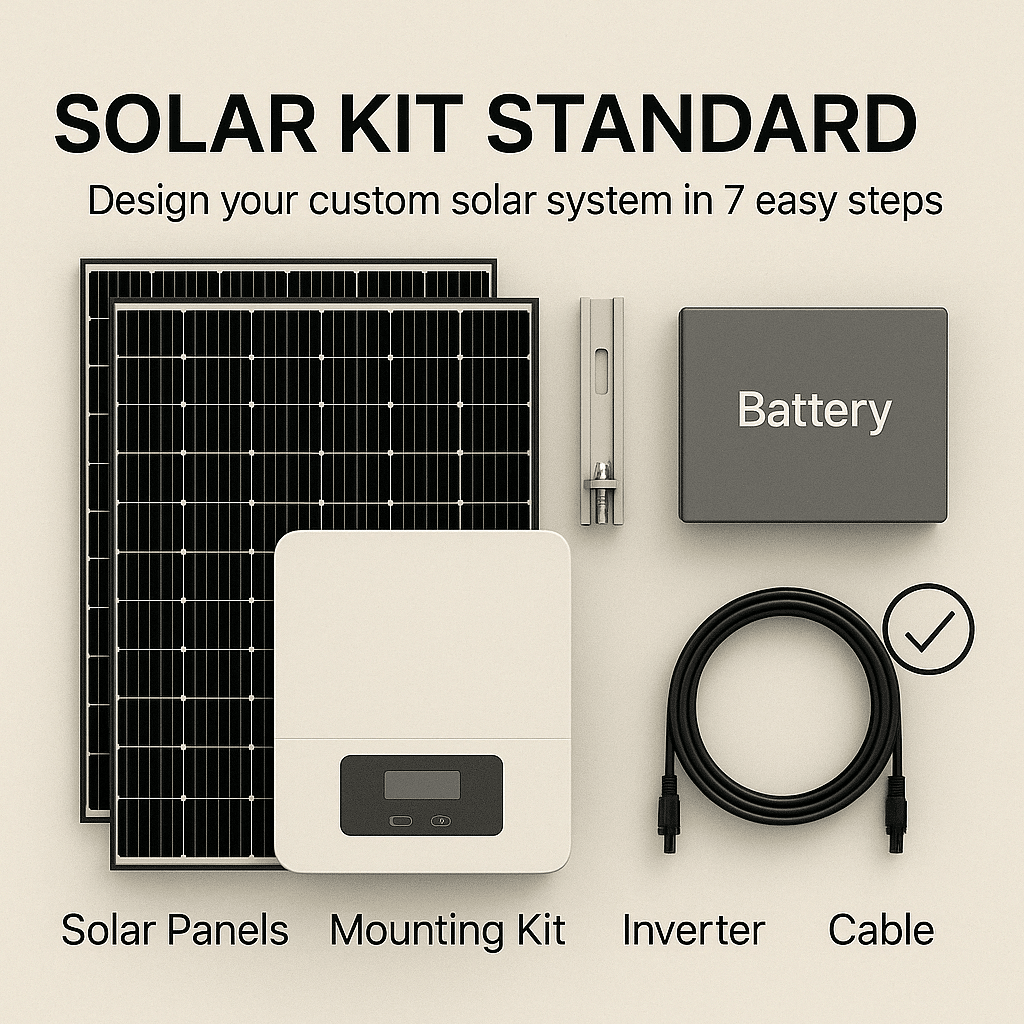
🔆 Standard Solar Kit – Your Custom Solar System in 7 Guided Steps
Design your solar setup with full flexibility and pre-configured mounting: choose solar panels, inverter, battery, mounting kit, wiring essentials, combiner, and accessories – all step by step and fully compatible.
✅ Includes mounting material from K2 Systems for standard layouts
✅ Choose only the components you need
✅ DIY-friendly and pre-checked for compatibility
✅ 🎁 Battery discount included when bundled
Reducing carbon emissions is a powerful motivator—but going solar brings a whole range of additional benefits that make it even more rewarding:
✅ Energy Independence
By generating your own electricity, you protect yourself from rising utility costs and volatile energy markets. With solar panels on your roof, you gain greater control over your energy future.
✅ Lower Electricity Bills
Solar energy doesn’t just save the planet—it saves you money. Most homeowners see a significant drop in their monthly electricity costs, with some even achieving net-zero energy bills.
✅ Increase Property Value
Homes with solar installations are increasingly attractive to buyers. Studies show that solar-equipped properties sell faster and for a premium compared to non-solar homes.
✅ Support a Greener Economy
Every solar system installed helps create local jobs in manufacturing, installation, and maintenance—supporting the transition to a sustainable economy.
✅ Energy Resilience
With the addition of battery storage, you can ensure a reliable energy supply even during blackouts or grid failures, keeping your home safe and operational.

Transitioning to solar power might seem like a big step, but at AceFlex, we make it simple, fast, and affordable—so you can start reducing carbon emissions without stress.
Here’s how you can get started in just a few easy steps:
The urgency to reduce carbon emissions has never been greater. Every action we take—no matter how small—contributes to the larger goal of protecting our planet. Solar energy offers one of the most direct and powerful ways to cut greenhouse gases by replacing fossil fuel-based electricity with clean, renewable power.
By harnessing the sun’s energy, each household and business can dramatically lower their carbon footprint, help stabilize our climate, and inspire broader change within their communities. Transitioning to solar isn’t just about saving on electricity bills—it’s about safeguarding the air we breathe, the water we drink, and the future we leave behind.
When we choose solar, we choose a future where progress and sustainability go hand in hand. The solutions are already here. All it takes is the decision to act.
Let’s reduce carbon emissions—starting today, starting with us.

Solar power generates electricity by converting sunlight into energy without burning fossil fuels. This process produces no carbon dioxide (CO₂) emissions during operation, significantly reducing the amount of greenhouse gases released into the atmosphere compared to traditional energy sources.
While the production and installation of solar panels do have a small carbon footprint, the energy generated by the panels themselves is 100% emission-free. Over their lifetime, solar panels offset many times the emissions created during their manufacturing process.
A typical 8 kW residential solar system can save around 6 to 7 metric tons of CO₂ every year. Over 25 years, that adds up to more than 150 metric tons—the equivalent of planting thousands of trees.
Manufacturing solar panels requires energy and raw materials, but technological advances have made production much cleaner over time. Furthermore, the emissions saved by a solar panel over its lifetime far exceed the environmental impact of its manufacturing.
Both solar and wind are excellent renewable energy sources that significantly reduce carbon emissions. The best option often depends on geographic location, energy needs, and available space. In sunny regions, solar tends to be the more practical and accessible choice for homeowners.
Carbon emissions refer to the release of carbon dioxide (CO₂) into the atmosphere, primarily from burning fossil fuels like coal, oil, and gas. These emissions trap heat and contribute to global warming and climate change.
Switching from fossil fuels to renewable energy sources—such as solar, wind, and hydropower—has the biggest impact. Reducing meat consumption, improving energy efficiency, and promoting reforestation are also significant contributors.
Globally, the largest source of carbon emissions is the burning of fossil fuels for electricity and heat production, followed by transportation and industrial processes.
Materials such as recycled steel, bamboo, low-carbon concrete, and plant-based insulation can reduce emissions in construction. Additionally, solar panels and energy-efficient appliances help lower operational carbon footprints.
Natural systems like forests, oceans, and soil absorb CO₂ through processes like photosynthesis and carbon sequestration. Some technologies also aim to capture and store carbon emissions directly from the air.
Carbon emissions include any release of carbon dioxide into the atmosphere—whether from vehicles, power plants, factories, agriculture, or even household heating. It’s often measured in metric tons of CO₂ equivalent (CO₂e) to account for other greenhouse gases too.