Massachusetts has long been at the forefront of clean energy innovation in the United States. Known for its strong environmental policies, ambitious climate goals, and supportive incentive programs, the Bay State continues to lead the way in residential and commercial solar adoption. With thousands of installations already in operation and more being added each year, solar in Massachusetts has become one of the most effective ways for homeowners and businesses to lower energy costs and reduce their carbon footprint.
Massachusetts ranks among the top ten U.S. states for solar energy capacity, with more than 3 GW of installed solar power generating electricity for over 500,000 homes statewide. The state’s ambitious Clean Energy and Climate Plan for 2050 aims to reach net-zero greenhouse-gas emissions, positioning solar power as a cornerstone of that strategy.
Unlike many regions that rely heavily on year-round sun exposure, Massachusetts demonstrates how policy leadership and technology can outperform climate constraints. Smart regulatory frameworks, strong utility partnerships, and forward-thinking consumers have made solar adoption both practical and profitable.
The state’s solar sector spans residential rooftops, solar farms, and commercial installations. Growing urban density in areas like Boston, Cambridge, and Worcester has also accelerated investment in high-efficiency panel systems that maximize limited space while ensuring optimal performance.

Source: SEIA
One of the main reasons solar in Massachusetts continues to thrive is the state’s comprehensive incentive structure. Massachusetts offers some of the most generous and well-structured solar programs in the nation — designed to accelerate adoption and make clean energy accessible for both homeowners and businesses.
SMART Program (Massachusetts Renewable Target)
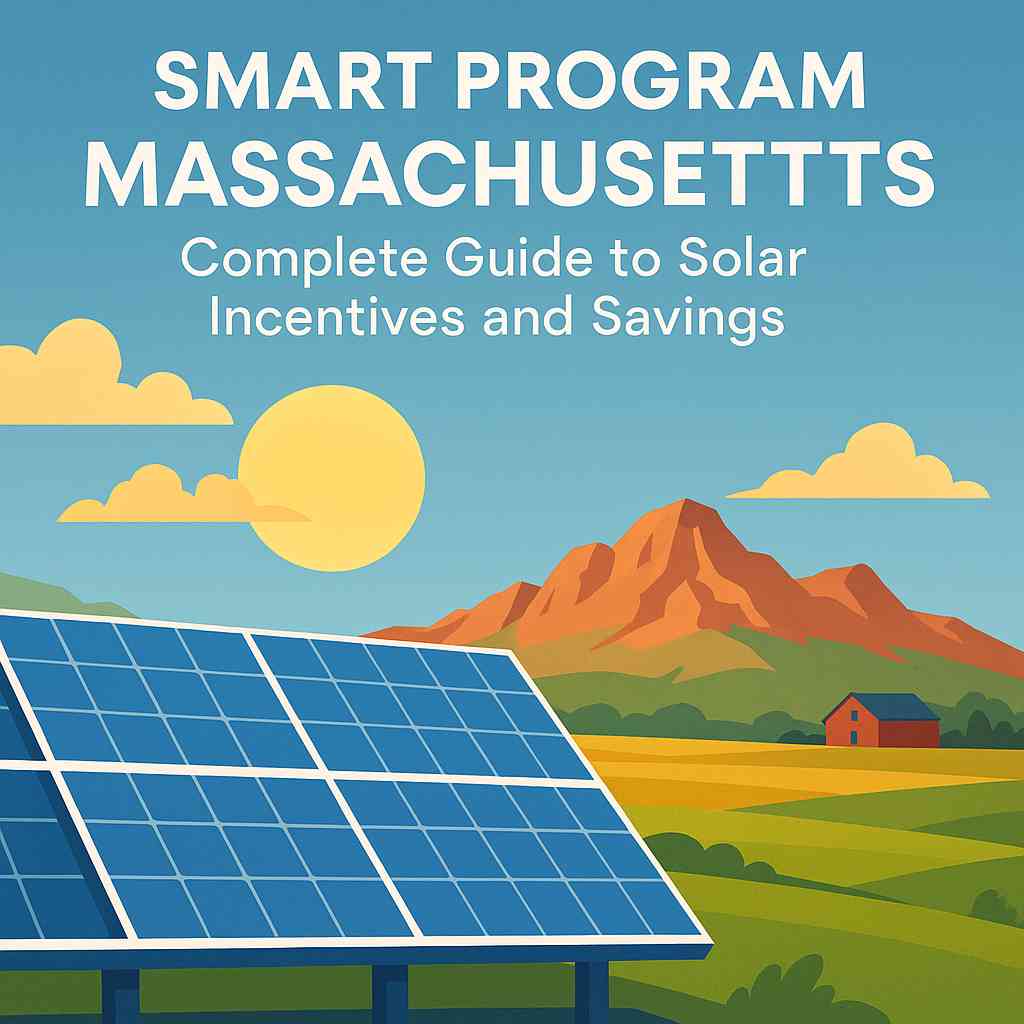
The cornerstone of the state’s incentive framework is the SMART Program, a long-term initiative managed by the Massachusetts Department of Energy Resources (DOER). Under this program, solar system owners receive monthly compensation for the electricity their systems produce, based on system size and location. Payments typically continue for up to 10 years, providing a stable and predictable return on investment.
For a detailed breakdown of how the Solar Massachusetts Renewable Target (SMART) Program works — including payment structures, eligibility, and estimated returns — read our full guide:
SMART Program Massachusetts – Complete Guide to Solar Incentives and Savings
Federal Investment Tax Credit (ITC)
Massachusetts residents also benefit from the 30 % Federal Investment Tax Credit, which allows homeowners and businesses to deduct 30 % of their total solar installation cost from their federal taxes. This incentive applies to both grid-tied and battery-backed systems purchased and installed before 2033.
This post references the former 30% Federal Solar Tax Credit. For current rules and guidance on solar after the federal tax credit , please read our updated overview.
Property and Sales Tax Exemptions
Massachusetts exempts qualified solar energy systems from state sales tax and provides a property tax exemption for 20 years on the added home value resulting from solar installation — a significant advantage for homeowners investing in long-term sustainability.
Together, these programs make Massachusetts one of the most financially rewarding states for solar adoption. By combining the SMART Program, federal incentives, and tax exemptions, homeowners can cut upfront costs by as much as 40–50 %.
The cost of going solar in Massachusetts remains competitive thanks to strong incentive programs and steady equipment pricing. As of 2026, the average installed solar cost ranges from $2.70 to $3.10 per watt. This means that a typical 6 kW residential system costs between $16,000 and $18,500 before incentives.
When homeowners apply the 30 % Federal Investment Tax Credit (ITC) and the Massachusetts SMART Program, upfront costs drop significantly — often to around $11,000–$12,000. Additional benefits, like property and sales tax exemptions, further enhance overall savings.
Over time, the financial return on solar energy in Massachusetts is highly attractive. With high retail electricity rates and reliable year-round performance, most homeowners achieve full system payback within 7–9 years, followed by decades of free electricity generation.
Securing the right solar equipment is just as important as selecting the right installer or incentive program. Massachusetts homeowners and contractors have access to a wide range of suppliers, but working with a trusted, experienced partner ensures system compatibility, compliance, and long-term reliability.
At AceFlex, we provide complete solar supply solutions for Massachusetts projects — from residential rooftops to commercial installations. Our portfolio includes:
All products are sourced through U.S. warehouses and shipped directly to your project site, ensuring short lead times We also help customers match their equipment selections with SMART Program requirements and federal incentive eligibility, streamlining the path from design to installation.
Going solar in Massachusetts is a straightforward process — especially with the right plan, equipment, and incentive support. Here’s a simple step-by-step guide to help homeowners and businesses navigate the process efficiently.
Step 1 – Evaluate Your Energy Needs
Start by reviewing your average monthly energy consumption. This helps determine the ideal system size and expected savings. A typical Massachusetts home uses around 600–700 kWh per month, which translates to a 5–7 kW solar system.
Step 2 – Choose Your Solar Kit or System Design
Select a system configuration that fits your property and energy goals. With AceFlex, you can choose between DIY Solar Kits or a custom-engineered system with advanced inverter and battery options.
Step 3 – Apply for Incentives and Permits
Before installation, apply for the SMART Program, the Federal Investment Tax Credit, and any local utility rebates. These incentives can reduce total costs by up to 50%. AceFlex provides guidance to ensure your chosen components meet all program requirements.
Step 4 – Install and Connect to the Grid
Once your system is approved, installation can begin. DIY customers can follow AceFlex’s setup documentation, or professional installers can complete the project using AceFlex-supplied components. After inspection, your system is connected to the grid.
Step 5 – Start Generating and Saving
After activation, your system immediately begins offsetting utility costs. You’ll also receive SMART Program payments and net metering credits — allowing you to generate consistent returns for the next decade and beyond.
Going solar in Massachusetts has never been easier. With AceFlex, you receive end-to-end support — from system design and incentive optimization to fast, reliable delivery of every component you need to power your home sustainably.
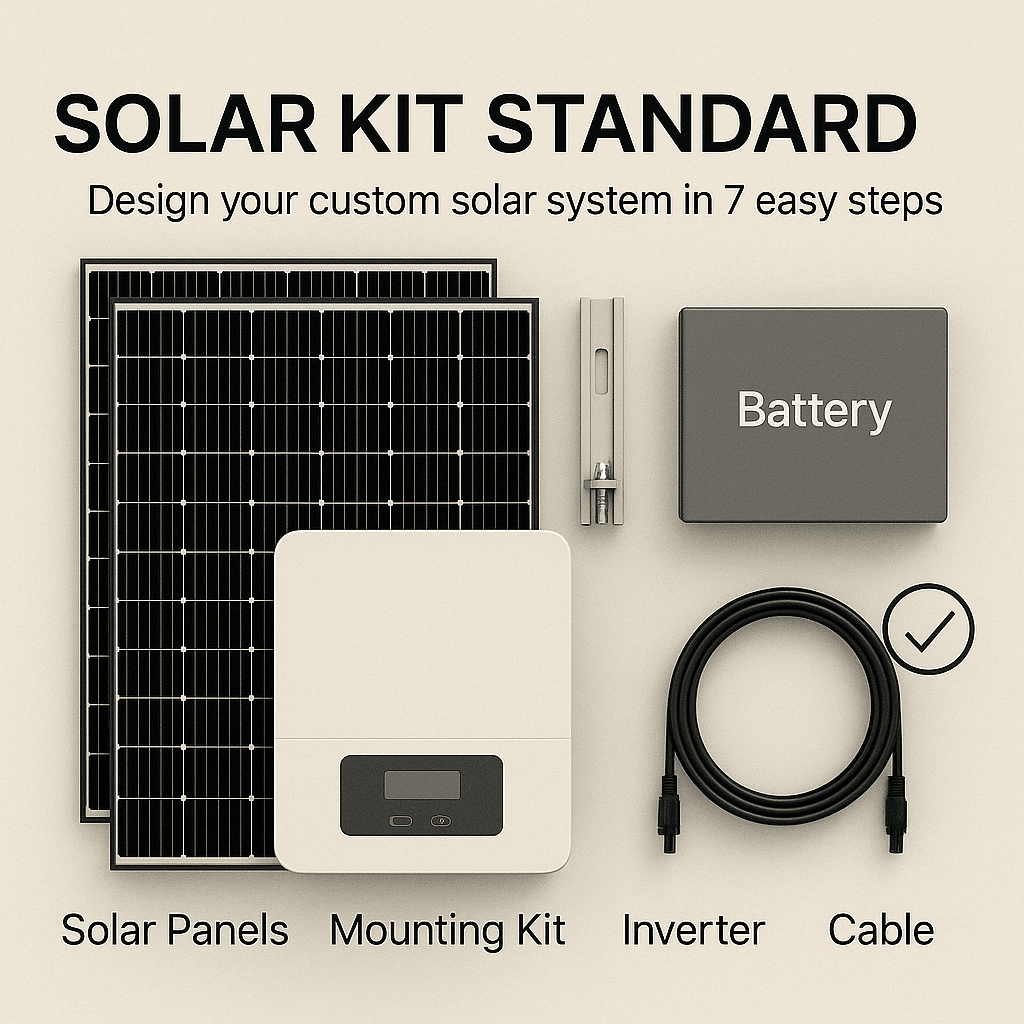
🔆 Standard Solar Kit – Your Custom Solar System in 7 Guided Steps
Design your solar setup with full flexibility and pre-configured mounting: choose solar panels, inverter, battery, mounting kit, wiring essentials, combiner, and accessories – all step by step and fully compatible.
✅ Includes mounting material from K2 Systems for standard layouts
✅ Choose only the components you need
✅ DIY-friendly and pre-checked for compatibility
✅ 🎁 Battery discount included when bundled
Massachusetts continues to prove that solar energy isn’t just for sunny climates — it’s for forward-thinking communities that value sustainability, independence, and innovation. With robust state incentives, advanced technology, and strong policy support, the Commonwealth stands as a national model for renewable energy adoption.
Whether you’re a homeowner seeking energy savings, a contractor sourcing high-quality components, or a business investing in clean power, the path forward is clear. Now is the ideal time to take advantage of the SMART Program, the Federal Investment Tax Credit, and other local benefits that make solar more affordable than ever.
At AceFlex, we make going solar simple and reliable. From DIY Solar Kits to custom-engineered systems, we provide the products, logistics, and expertise you need to design, install, and power your property with confidence.
➡️ Get your free solar consultation today and discover how much you can save with AceFlex.

The average cost to install solar panels in Massachusetts ranges between $2.70 and $3.10 per watt. For a typical 6 kW residential system, this equals around $16,000–$18,500 before incentives.
A complete residential solar installation typically costs between $15,000 and $20,000 before incentives, depending on roof type, equipment quality, and system size. With available tax credits and SMART Program payments, homeowners can expect to save 40–50% off that total.
Yes. Massachusetts offers one of the strongest solar markets in the United States. High electricity rates, stable state policies, and the SMART Program make solar systems financially rewarding, often achieving payback within 7 to 9 years.
Absolutely. Massachusetts cooler temperatures improve panel efficiency and strong incentives make solar a sound investment.
The SMART Program (Massachusetts Renewable Target) provides monthly payments for solar energy production over a 10-year period. It can be combined with the Federal ITC, property-tax exemptions, and net metering for even greater returns.
Learn more in our detailed guide: SMART Program Massachusetts – Complete Guide to Solar Incentives and Savings
Yes. Solar systems are exempt from state sales tax, and any additional property value created by solar panels is exempt from property taxes for 20 years.
No, solar isn’t free, but state and federal programs significantly reduce the cost. With the Federal ITC, the SMART Program, and local rebates, many homeowners cover most of their upfront costs and quickly recover their investment through energy savings and monthly incentive payments.
Net metering allows homeowners to earn credits for excess electricity exported to the grid. These credits are applied to future utility bills, helping solar owners balance their energy costs over the year.
Yes. Solar panels perform efficiently in cold conditions, and most snow melts quickly due to panel tilt and dark surfaces. Even in winter, systems continue producing power effectively.
Yes. DIY installation is possible if you meet local permitting and inspection standards. AceFlex offers DIY Solar Kits with all required components and documentation to simplify the process.
Yes. Homes with solar systems typically sell for 4–6% more on average, as buyers value lower electricity bills and energy independence.
Most homeowners see 80–100% reductions in monthly electric bills. In many cases, net metering credits completely eliminate electricity costs.
Begin by reviewing your energy usage and exploring incentive eligibility. Then, contact AceFlex to receive a custom solar proposal that includes qualified components, guidance, and fast delivery anywhere in Massachusetts.